Showing posts with label Weight loss. Show all posts

Thursday, January 31, 2013

Myth: When I eat during the day will determine how successful I am at managing my weight.

Answer: BUSTED?

Clock with fruits & vegetables on it
The results of a new Spanish study about the timing of when you eat and effectiveness of weight loss (late eaters experienced slower weight loss) has received a lot of attention. Why? Everyone is looking for a weight loss ‘magic bullet.’ Is the timing of when you eat that ‘magic bullet’? Well, it could be for you but not someone else. Managing your weight is affected by many things – your senses (taste, smell), your emotions, your body’s hormones that regulate appetite, the environment and numerous other factors. This particular study has its flaws. Whenever you read the results of a study, you should ask yourself some questions:

  1. How similar am I to the people involved in the study? This study involved overweight people in Spain. Their ages weren’t reported in the popular media stories about the study results.
  2. How was the study designed? In this case, those in the study weren’t randomly assigned to a treatment or control group. This is considered an observational study. Random assignment is one way researchers find out if the only difference between the two groups is what they are studying – in this case the timing of when meals are eaten.
  3. Does the study show cause and effect or just some association? Observing differences in groups that aren’t randomly assigned to a treatment or control group doesn’t show that one thing (eating later) causes something else (more weight loss). It’s an interesting observation that other studies will need to confirm.

One finding from the study is insightful – late eaters ate fewer calories for breakfast and were more likely to skip breakfast than the early eaters. The National Weight Control Registry, which tracks the behaviors of over 10,000 people who have been successful at long-term weight loss, found that 78% of those in the registry eat breakfast every day. Something to consider when managing your weight.

For more information about managing your weight, go to http://missourifamilies.org

Contributor: Ellen Schuster, M.S., R.D., Associate State Specialist, University of Missouri Extension, schusterer@missouri.edu, 573-882-1933

Thursday, January 3, 2013

Myth: If a weight loss product is sold or promoted on TV, it’s safe for use.

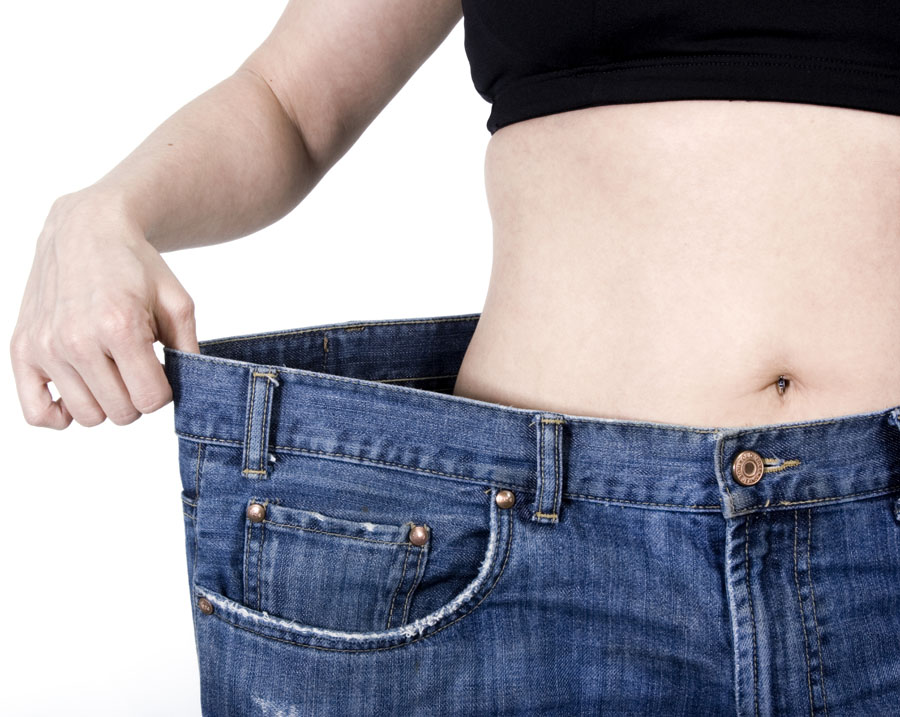
Woman holding out extra large waistband on jeans indicating weight loss
There is no quick fix for weight loss.
Answer: BUSTED!

It’s that time again – the post-New Year’s ‘get the weight off’ kick. The Healthy Weight Network has released its Slim Chance Awards for 2012, identifying the worst weight loss schemes of the year. Raspberry ketone pills for weight loss and other products are given the top spots on this list, which can be found at http://www.healthyweight.net/fraud.htm#news. These products are unproven and could be risky for some. And expensive! The raspberry ketone pills may cost $12 to $20 a bottle depending on how many pills are in a bottle and the dose. Many of these products are celebrity endorsed. Google recently announced its most popular diets of 2012 based on online searches conducted, many of which were diets promoted by celebrities.

Want to protect yourself from these weight loss schemes and products? Learn more and watch this 3-minute video at http://www.fda.gov/ForConsumers/ProtectYourself/HealthFraud/ucm267540.htm.

How do you easily spot a weight loss scam? If you see the words “fat burning,” “guaranteed” and “quick and easy” used in ads or other promotional materials for weight loss diets or products, run the other way!

Go to Missourifamilies.org for more information about how to make healthy food choices and be more active.

Contributor: Ellen Schuster, M.S., R.D., Associate State Specialist, University of Missouri Extension, schusterer@missouri.edu, 573-882-1933

Wednesday, November 7, 2012

Myth: It is okay to put an overweight child on a diet.

Answer: BUSTED!

If your child is overweight, the solution is not to restrict calories. Putting children on restrictive diets or forcing them into intense exercise programs can, in many cases, do more harm than good. Children are rapidly growing and developing their skeletal structure. By choosing to limit calories, some children may not develop their full bone and muscle mass. It is advisable not to put your child on a diet, especially without consulting your doctor. Educating your child to make wise food choices and to increase their physical activity level will help achieve lifelong health and fitness.

Mother preparing healthy foods with son and daughter
Involve kids in food prep & make it fun!
You can help your child to maintain a healthy weight by following these few tips:
  • Be active by playing together.
  • Make family mealtimes a special time together.
  • Save fast food for a treat.
  • Serve fruits and vegetables creatively.
  • Drink milk with meals and water with snacks.
  • Set healthy limits on screen entertainment like television and video games.
  • Get kids in the kitchen.

For more information, visit MissouriFamilies.org.

Contributor: Damaris Karanja, MA, Nutrition and Health Education Specialist, St. Louis County, University of Missouri Extension, Karanjad@missouri.edu

Friday, April 22, 2011

Myth: If my Body Mass Index (BMI) is high, I should start trying to lose weight.

Answer: Maybe

Body Mass Index, or BMI, is a calculated number that is used to assess overweight and obesity, as well as health risks for chronic disease. It is based on a person’s weight and height. To calculate, you’ll need to divide your weight (in kilograms) by height squared (in meters²). An easier way to determine your BMI is to use the National Heart, Lung and Blood Institute’s online calculator. The following BMI ranges indicate your weight status:
doctor's scale
  • Normal weight = 18.5 – 24.9
  • Overweight = 25 – 29.9
  • Obese = 30 or greater

BMI is a good general tool to assess health status; however, it is not appropriate for everyone. Healthy adults who exercise heavily, such as highly trained athletes, have a significant amount of muscle mass and will have higher BMIs despite having a low percentage of body fat. This occurs because muscle weighs more than body fat. Additionally, the BMI ranges are also not appropriate to use for children. A pediatrician will use BMI-for-age growth charts that are specific for boys or girls. These charts are used for children and teens, ages 2 – 20 years of age.

Always check with your doctor before starting a weight loss regimen. For more information about achieving and maintaining a healthy weight, check out MissouriFamilies.org.

Contributor: Mary Wissmann, MS, RD, LD, Nutrition and Health Education Specialist, St. Louis County, University of Missouri Extension, WissmannM@missouri.edu

Friday, October 29, 2010

Myth: If I’m a woman and I don’t want to “bulk up,” I should lift lighter weights to get toned muscles.

Answer: Busted!

woman with hand weightMuscle tone is a quack term that is often used in exercise infomercials. It can’t be measured, so infomercials can promise increased muscle tone without risk. The appearance of strong muscles can only be accomplished through strength training (weight lifting) and a minimal layer of fat over the muscles. This is best accomplished through a healthy diet and increased physical activity. It is not possible for women to “bulk up” in the sense that men can. Men have high levels of the hormone testosterone, which enables them to build more muscle than women. Most women can begin strength training with a pair of two or three pound dumbbells and work up to higher weights over time.

Strength training does more than improve your looks. It will lead to stronger bones which reduces the risk of osteoporosis and fractures; improve blood cholesterol and blood sugar; improve posture; decrease back pain; improve arthritis pain; and even improve mood and self confidence.

If you’re interested in beginning an exercise routine, check your Physical Activity Readiness and look for a Stay Strong, Stay Healthy program in your area to learn the basics of strength training.

Contributor: Mary Wissmann, MS, RD, LD, Nutrition and Health Education Specialist, St. Louis County, University of Missouri Extension, WissmannM@missouri.edu

Tuesday, August 17, 2010

Myth: Coconut water can help me lose weight.

Answer: Busted!

No, there is no proof that coconut water can help you lose weight. Although low in calories – 46 calories for a cup – there is nothing special about coconut water that helps with weight loss. As in the previous blog, if you choose to drink coconut water, read the label! Make sure there is no added sugar or fruit purée. These ingredients would make coconut water higher in calories. (Coconut water has about a teaspoon and a half of natural sugar.) By the way, coconut water doesn’t cleanse your kidneys or help your mental clarity either as some websites claim.
coconut and glass of coconut water

Want more information about weight gain? See Conquer Weight Gain with Small Changes. Visit the MissouriFamilies website for more information about nutrition and health.

Contributor: Ellen Schuster, M.S., R.D., Associate State Specialist, schusterer@missouri.edu, 573-882-1933

Wednesday, May 12, 2010

Myth: You can burn fat and lose weight by eating certain foods, like grapefruit and celery or foods with caffeine.

Answer: Busted!

No foods can burn fat. Some foods with caffeine may speed up your metabolism (the way your body uses energy, or calories) for a short time, but they do not cause weight loss.

Tip: The best way to lose weight is to cut back on the number of calories you eat and be more physically active.

Contributor: James E. Meyer, Nutrition and Health Education Specialist, University of Missouri Extension, meyerje@missouri.edu

Thursday, April 29, 2010

Myth: Skipping meals is a good way to lose weight.

feet on bathroom scale
Answer: Busted!

It seems logical - skip a meal, eat less food and lose weight. Skipping meals makes your body think you are in a starvation mode, slows your metabolism, and makes you hungry. In fact, you may be so hungry that you overeat the next time you eat. You end up eating more calories than if you had just eaten the meal.

Skipping a meal and making up for it later can lead to eating more calories overall and work against your weight loss efforts. A better approach is to honor your hunger and eat smaller, more frequent healthy meals and snacks throughout the day. Choose foods that will fill you up and give you lasting energy, such as fruits, vegetables, whole grains and lean protein.

Contributor: Karen Sherbondy, RD, LD, Extension Associate, Nutrition and Exercise Physiology, University of Missouri Extension, sherbondyk@missouri.edu

Friday, April 23, 2010

Myth: Eating after 8 PM causes weight gain.

clock showing 8:00
Answer: Busted!

It doesn’t matter what time of day you eat. It boils down to what and how much you eat and how physically active you are during the entire day. These factors determine whether you gain, lose or maintain your weight. Your body will store extra calories as fat, no matter when you eat.

However, eating later in the evening may get you into trouble. Often we eat in the evening because we are tired or bored. Try to avoid snacking in front of the TV - it may be easier to overeat when you’re distracted by the TV. Leave the room and do something else during the commercials to decrease your exposure to advertisements that may trigger eating.

Think first about how much you’ve eaten already in the day. It’s a good idea to eat more of your calories during the time of day you are most active. That is different for everyone.

Contributor: Karen Sherbondy, RD, LD, Extension Associate, Nutrition and Exercise Physiology, University of Missouri Extension, sherbondyk@missouri.edu

Tuesday, January 26, 2010

Myth: I have to count calories to lose weight.

Answer: Busted!

There are many ways to cut calories without having to keep track of them. Here are a few simple ways:
  • Cut back on fat. Choose lean cuts of meat and low-fat milk or dairy products.
  • Eat smaller portions. Even low-calorie foods can add up when your portions are bigger than you need.
  • Use low-fat cooking techniques. Try baking, broiling or grilling.
  • Use a smaller plate. Your plate will be full but will have less food on it. Less food equals fewer calories.
  • Don’t drink your calories. Drink sugar-free beverages or water.
  • Eat slowly. Take 20 minutes to eat your meal. It takes that long for your body to realize the stomach is full.
  • Fill up on fiber. Eat plenty of fruits, vegetables, and whole grains. They fill you up but not out.
  • Limit extras. Gravy, sauces, salad dressings and margarines can add up quickly. Use them sparingly-a little will give you a lot of flavor. Many restaurants add butter to steaks or vegetables, so make sure to request no extras be added to food when eating out.

Remember all foods fit into a healthy eating plan. You’re more likely to stick to your plan if you don't deprive yourself. Everything fits in moderation.

Friday, January 22, 2010

MYTH: I can’t lose weight-I’m a stress eater.

Answer: Busted!

We eat for many reasons other than hunger. We eat when we’re stressed, bored, depressed, angry, or tired. We eat for comfort. We eat while doing other activities, on the go, or just because food is there. We eat in response to different triggers at different times.

Can you identify your triggers? Doing so can help you manage your weight. You will also feel more in touch with your body.

Keep a journal of not only what you eat, but when, where and what else you’re doing while you’re eating. Jot down how you feel at the time. Rate your level of hunger on a scale of 1 to 10 (with 1 being “starving” and 10 being “stuffed”). Review the journal - you’ll start to see patterns that you may want to change.

Bringing the subconscious to a conscious level is the first step in becoming more mindful of your eating. Ask yourself “how do I feel?” and “what is it I really need?” For example, if you’re tired, you may need a nap rather than food.

Tune into feelings and hunger and make a conscious decision to eat or not to eat in response to emotional issues. Contact a qualified professional if you need additional help.

Developing this connection will take determination, patience and commitment but will be well worth it!

Wednesday, January 13, 2010

All I need is a good diet to lose weight.

Answer: Busted!

Often our New Year’s resolutions include going on a diet to lose weight. Many times we think of diets as something we “go on.” If we “go on” a diet, then at some point we will “go off” the diet. After a few weeks this resolution can leave us feeling frustrated, guilty, or like a failure. Instead of resolving to “go on” a diet, a better approach is to focus on making lifestyle changes that include changes in our eating and physical activity habits.
  • Forget the fad diets and exercise plans. Is what you’re asking yourself to do something you can live with and do the rest of your life? If not, re-evaluate.
  • Be realistic. Make sure your goals and eating or activity plans work for you and your lifestyle. Start slowly and gradually increase your goals.
  • Make a commitment. If you are not truly committed to your goal, it won’t happen.
  • Write it down. Writing things down builds in self-accountability. Keep a food journal. Include not only what you ate, but how much, when, and where you ate. This can make you aware of your eating habits and can help you find trigger foods or situations. It may also help you cut down on mindless eating. Use your journal to keep track of physical activity as well.
  • Plan ahead. Have a plan in place for those times you anticipate more challenges with healthy eating and physical activity. They will happen-be prepared!
  • Forgive yourself. You don’t have to be perfect. If you feel like you’ve failed, you’re likely to give up. If you view the changes as a lifestyle, then an off-day here or there will not make or break you. You only fail if you quit.
  • Build in a non-food reward system. It might be as simple as getting that new book you’ve been wanting. Reward yourself for those positive lifestyle changes that you’re making. Rewards reinforce positive behaviors and can be incentives for continued changes. Success breeds success.

These strategies will help you make those permanent lifestyle changes and keep your New Year’s resolutions!

Monday, December 28, 2009

MYTH: Physical activity is icing on the cake—it doesn’t do anything for me, really.

Answer: Busted.

Let’s explore physical activity as a part of losing weight.

Again, using the analogy of the appliance, one of the questions to consider is ‘What way will give me the “best product for my money” (or, best weight loss for my effort)?’ If weight loss is the only thing we want from our New Year’s Resolution, then physical activity may not be an aspect of the “appliance” we want to buy with our time and effort. Why is that? Most weight loss occurs with reducing calories. Physical activity uses some calories, but not nearly enough to result in a meaningful amount of weight loss in a reasonable length of time. If our resolution is really to improve our health by losing weight, then that is a whole different matter—physical activity is crucial!

Physical activity has been shown to reduce blood pressure, without any other behavior changes! Also, being physically active helps us to keep our muscles strong, even when we are losing weight. Why is this important? Well, the lean part of our bodies (muscle and major organs—like the heart and liver, to name a few) is the part of the body that uses the calories we eat or drink. If our body has more muscle, then we are going to burn more calories every day—more than another “body” our same age and size that is less lean. Physical activity also reduces the chance of developing heart disease and diabetes more than just weight loss by itself.

Our proposed resolution just made a change to: “lose weight to be healthier.”

While the holiday season is a great time to practice changing eating behaviors, it can also be a time to practice being more physically active. A lot of people shop more during this time, which gives us practice time! Some ideas to experiment with include the following:

Plan your after-Christmas/New Year's shopping trips to include walking the longest distances between stores or items being purchased—forget about saving time and being efficient! Going from one end of the mall or store to the other end to buy items on your list will automatically increase the steps you are taking.

After completing your shopping trip, take a final “lap” around the mall or store—adds steps with little extra time.

Consider buying yourself a pedometer. Using a pedometer is one way to track the number of steps taken per day.

Did you know that cleaning house is considered a moderate activity? Maybe spend some time everyday cleaning house? A more organized, company ready home would be a bonus!

How about walking the dog? People who walk their dogs log in more steps that than who don’t. Plus, the regularly walked dog will help keep you walking often—who can resist those eyes begging for a walk?

While you are practicing including physical activity in your life this week, think about what keeps you from being physically active during your “regular” life. Knowing what keeps us from doing what we want to do is excellent information to help us choose our final New Year’s Resolution.

Friday, December 11, 2009

MYTH – Changing habits is “as easy as pie”.

Answer: Busted.

For those of us who have made the same New Year’s Resolution for several years in a row, we KNOW how hard it is to change our habits—regardless of what they are. Changing a habit takes determination and practice.

Of course, the first step in changing a habit is deciding which one to change and then go from there. December is the perfect month to really think about what habit we want to change in 2010. As an added bonus, this month gives us time to practice a bit before settling on a specific resolution.

Let’s consider making a resolution to lose some weight next year. In thinking through what needs to change to lose weight, three ways come to mind—changing what we eat or changing our physical activity or both. If we think about losing weight as something we are going to buy (like a major appliance), maybe we should think about what “appliance” will work best for us, how much it “costs” and will it give us the “service” we want? Some example questions to help us decide which way to use to lose weight are: What will I have to do to make each of these ways work for me? What way “fits” best into my life right now? What way will give me the “best product for my money” (or, best weight loss for my effort)?

The holiday season is a great time to practice changing eating behaviors. Some ideas to experiment with include the following:
· When taking food to a party or office-gathering, consider taking low-calorie snacks like vegetable trays. Put cottage cheese in a food processor or blender, add a bit of water and a package of flavoring for a lower calorie, more nutritious vegetable dip. Salsa is also a great low-calorie sauce to use with pita crisps.
· How about using a smaller plate? Research has shown that using larger plates results in more food being eaten. Take a few snacks and move away from the table. People who stand and talk by the food table tend to eat more than those that don’t. Mingle with everyone at the party—focus on the fun and the people, instead of the food.
· Watch those beverages! Drink diet soda, diet tonic water or a glass of water instead of multiple glasses containing calorie-loaded fluid!

Look for more hints next week!