Showing posts with label Eggs. Show all posts

Wednesday, April 16, 2014

Myth: It is not safe to eat Easter eggs.

dyed Easter eggs in egg carton
Answer: That depends...

Decorating and hunting for Easter eggs are fun traditions for many families. However, you should follow the food safety practices listed below if you want to safely eat those eggs afterwards. Otherwise, the eggs should be discarded.

  • Dyeing eggs: After hard-boiling and dyeing eggs, they should be returned to the refrigerator within 2 hours to keep them cold. Be sure to use food-safe coloring if you are planning to eat the eggs. Also, make sure that everyone handling the eggs washes their hands first, as with any food product.

  • Hunting eggs: One of my earliest memories of witnessing a questionable food safety practice was seeing my cousin eat an Easter egg that we found outside on the ground about a week after the eggs were hidden. That was definitely not a safe practice! In fact, the total time that hard-boiled eggs should be out of the refrigerator while they are hid, hunted and found is 2 hours. It is also not recommended to eat hard-boiled eggs that have been lying on the ground because they can pick up bacteria, especially if the shells are cracked. Eggs should be hidden in places that are protected from dirt, moisture and other sources of bacteria. These “found” eggs must be washed, re-refrigerated and eaten within 7 days of cooking.

Hiding plastic eggs is the safest option for numerous reasons, including if you want to hide the eggs on the ground or don’t want to have to worry about getting hard-boiled eggs back in the refrigerator within two hours.

No one wants to have foodborne illness anytime, particular after a holiday, so be sure to follow these simple food safety practices. Enjoy your Easter eggs safely!

More information on Easter egg safety is available at http://missourifamilies.org/features/nutritionarticles/nut125.htm.

Contributor: Londa Nwadike, PhD, Extension Food Safety Specialist, University of Missouri/Kansas State University, nwadikel@missouri.edu, 816-655-6258

Friday, July 8, 2011

Myth: Throw away eggs with blood spots in the yolk.

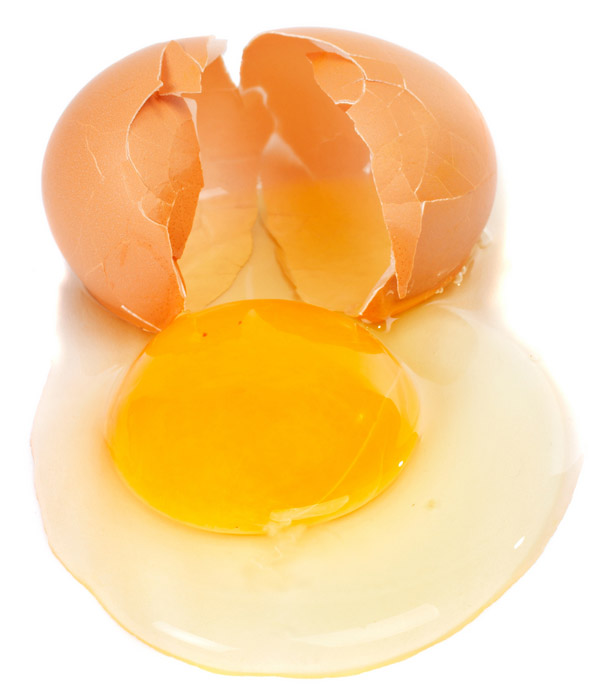
broken egg shell with egg spilling out
Answer: Busted!

Occasionally, a small blood spot will appear in an egg yolk. This actually indicates an extremely fresh egg. This does not indicate a fertile egg, but rather a ruptured capillary on the yolk surface during the egg formation. These eggs are safe to eat and the blood spot can be removed with a knife for better appearance.

Additional nutrition and health information can be found at http://missourifamilies.org.

Contributor: Maude Harris, Nutrition and Health Education Specialist, University of Missouri Extension, harrismau@missouri.edu, 573.545.3516

Wednesday, April 20, 2011

Myth: If I hard-boil my Easter eggs, it’s safe to use them for the Easter egg hunt.

Answer: Busted!

dyed Easter eggsWith Easter just around the corner, many families are planning Easter egg hunts for the kids. While it may be tempting to hide the dyed, hardboiled eggs for the hunt, it’s not safe if you plan to eat those eggs after the Easter festivities are over. Hard-cooked eggs must be refrigerated within 2 hours of cooking because they actually spoil faster than raw eggs. Purchase reusable plastic eggs for the Easter egg hunt and you’ll save yourself some money and keep your family safe. Save the dyed eggs for eating.

For more Easter egg safety tips, check out the article Follow safety rules when preparing Easter eggs.

Contributor: Mary Wissmann, MS, RD, LD, Nutrition and Health Education Specialist, St. Louis County, University of Missouri Extension, WissmannM@missouri.edu

Thursday, June 24, 2010

Myth: The “sell by” date on the egg carton in my refrigerator is the same date as on the calendar so now I have to throw them away.

Answer: Busted!

“Sell by” is simply a voluntary date many food manufacturers use to let grocers known when to pull a product. It has to do with taste, however, not quality. Most products are good for at least a week after the “sell by” date. However, their nutritional value decreases, and that – not safety – is the real issue!

Additional information is available Missouri Families.

Contributor: Maude Harris, EdD, Nutrition and Health Education Specialist, University of Missouri Extention, harrismau@missouri.edu

Wednesday, May 5, 2010

Myth: If I want to keep my cholesterol low, I should avoid whole eggs.

scrambled eggs on toast
Answer: Busted!

New research shows that the cholesterol present in eggs has little if any affect on your blood cholesterol.

Eggs have a lot of cholesterol located in the yolk. The average large egg contains 212 milligrams of cholesterol. As foods go, that’s quite a bit, rivaled only by single servings of liver, shrimp, and duck meat.

It was once thought the cholesterol present in eggs would go straight to your bloodstream and then into your arteries. This is not so according to recent scientific research. For most people, only a small amount of the cholesterol in food passes into the blood. Saturated and trans fats have much bigger effects on blood cholesterol levels.

If you like eggs, eating one a day should be okay, especially if you cut back on saturated and trans fats. Other ways to enjoy eggs without worrying about cholesterol include not eating the yolk, which contains all the cholesterol, or using pourable egg whites or yolk-free egg substitutes.

For more information about healthy eating, visit http://missourifamilies.org/.

Contributor: James E. Meyer, Nutrition and Health Education Specialist, University of Missouri Extension, meyerje@missouri.edu

Tuesday, March 2, 2010

Myth: Brown eggs are healthier than white eggs.


Answer: BUSTED!


The color of the shell has nothing to do with the hen's health, the egg's quality, or the egg's nuritional value. Shell color is only determined by the breed of the hen; certain breeds lay brown eggs and others lay white.

Regardless of the color, check inside the carton for uncracked shells when egg shopping. Always purchase eggs before the "sell by" or expiration date if stamped on the carton. Once home leave eggs in their original carton and place them in the coldest part of the refrigerator. Eggs should never be stored in the refrigerator door because they will get warmer each time the door is opened, causing fast spoilage. For best quality, use eggs within 3 to 5 weeks after the date you purchase them. Even if the "sell by" date expires during that length of time, the eggs are still safe to eat.

For more information on preparing hard-boiled eggs, check out MissouriFamilies.org