Showing posts with label Food preservation. Show all posts

Thursday, March 14, 2013

Myth: Canning your homemade stew, spaghetti and even mashed potatoes is safe.

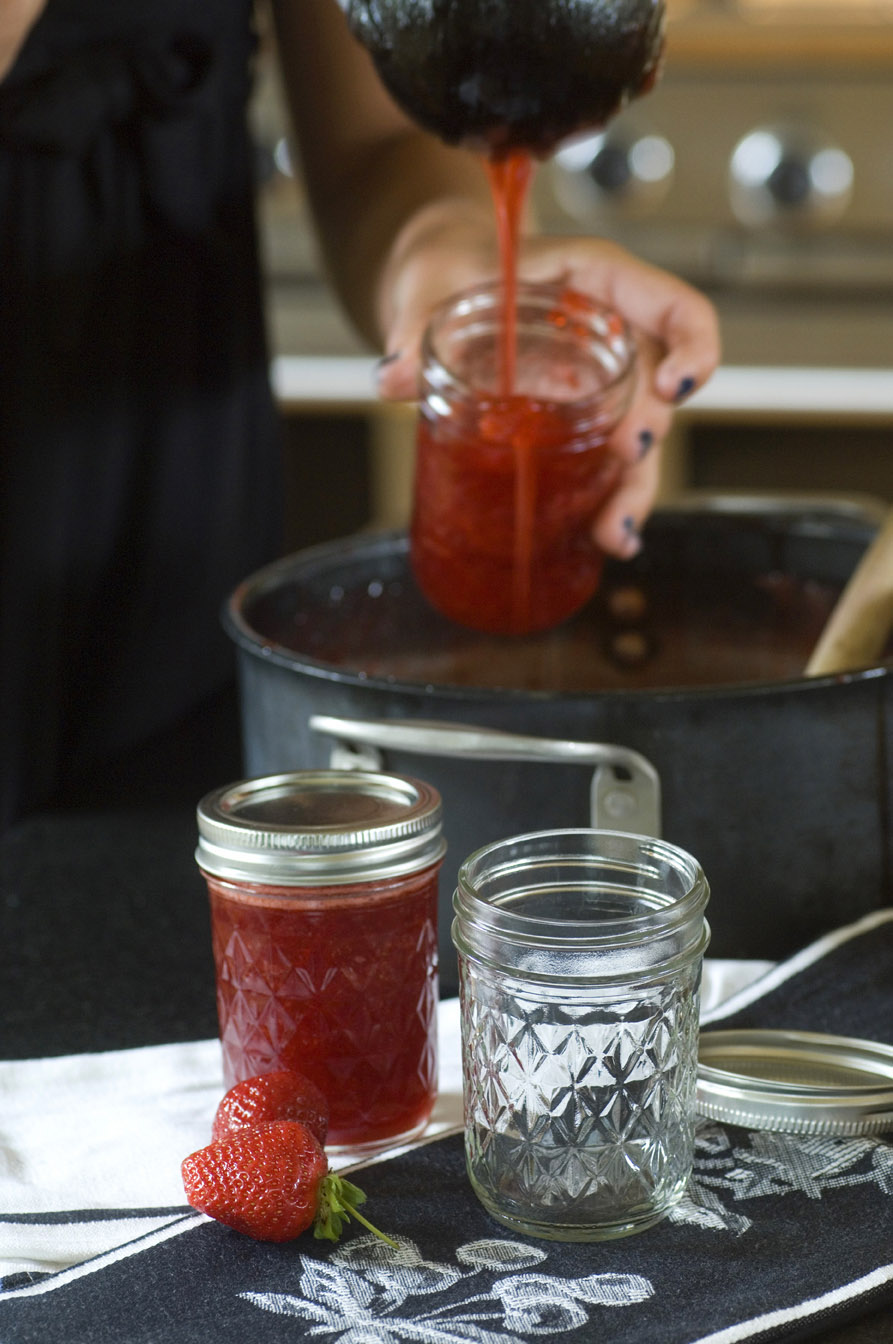
Filling canning jars using tested recipe
Answer: BUSTED!

Some people put leftovers from the table in a canning jar and process it long enough to seal the jar. This is not safe. It IS safe to can spaghetti sauce and stew but only from tested recipes. Some foods cannot be canned because it is impossible for the center of the food to reach high enough temperatures to destroy bacteria. Thickened stews and mashed potatoes are examples of foods too thick to can.

Guide sheets for home food preservation can be found at http://extension.missouri.edu/publications. The National Center for Home Food Preservation’s site is http://nchfp.uga.edu.

Contributors: Tammy Roberts (660-679-4167) and Susan Mills-Gray, Nutrition and Health Education Specialists, University of Missouri Extension

Thursday, March 7, 2013

Myth: The recipes that I find online for meals in a jar should be safe.

Answer: BUSTED!

Meals in a jar can be convenient and they can make nice gifts, but there is no guarantee that they are safe recipes. There are sites on the internet that suggest you pressure can a chicken soup recipe and then store each jar with a bag of noodles for a quick meal later. That can be done, but the soup is not safe unless it is from a tested recipe. Before spending an entire day preparing meals in a jar, make sure you are using tested recipes for home canning. Don't risk the health and safety of those who will be eating the final product. 

home-canned foods

Tested recipes are available through your local Extension office, the National Center for Home Food Preservation and Ball.

Contributors: Tammy Roberts (660-679-4167) and Susan Mills-Gray (816-380-8460), Nutrition and Health Education Specialists, University of Missouri Extension

Thursday, August 25, 2011

Myth: It’s so hot I can put fruit in the back of my car window to dry.

Answer: Busted!

Drying is one of the oldest methods of food preservation, and methods for drying foods have become more sophisticated over time. There has been renewed interest in this form of food preservation and people are rediscovering drying foods at home.

Drying removes the water from food, which is how properly dried and stored foods last for so long. Microorganisms that cause food to spoil can’t survive with less moisture.

Drying doesn’t improve the quality of fruits or vegetables, so it is important to choose produce of high quality and at the desired stage of ripeness. Most fruits need pre-treatment before drying to reduce vitamin loss, flavor loss, browning and deterioration during storage.

Foods can be dried in the sun or in a solar dryer, but using an oven or electric dehydrator is more reliable than depending on the weather. Temperatures and humidity levels can be unpredictable, so food may sour or mold before drying is completed.

An electric dehydrator uses warm air and good air circulation to remove moisture from food. A drying temperature of 140 degrees F is recommended and drying times vary from a few hours to a full day. Times depend on the moisture content, amount of food, room temperature and humidity.

The temperature in the back car window on a hot summer day can far exceed the recommended drying temperature and there certainly isn’t good air circulation that is needed for proper drying. You may end up with cooked fruit, not dried fruit. If the food cooks on the outside and moisture can’t escape, the food can mold.

Remember that drying is a form of food preservation. As with any food preservation method, safe practices are the key. See Quality for Keeps: How to Dry Foods at Home for more information.

Visit the MissouriFamilies website for more information about nutrition and food preservation.

Contributor: Karen Sherbondy, MEd, RD, LD, Extension Associate, Nutrition and Exercise Physiology, University of Missouri Extension, 816-655-6227

Wednesday, August 17, 2011

Myth: I can just put the beans from my garden directly in the freezer.

Answer: Busted!

Vegetables frozen without blanching are safe to eat, but the quality will not be good. Blanching (scalding vegetables in boiling water or steam for a short time) is a must for almost all vegetables. Blanching stops the action of enzymes. If enzymes remain active during freezer storage, they can cause undesirable changes in flavor, texture and color, as well as loss of vitamin A and vitamin C.

blanching green beansBlanching time is crucial and varies with vegetables. Under-blanching stimulates the activity of the enzymes and is worse than no blanching. Over-blanching causes loss of flavor, color, vitamins and minerals. See this guide for recommended blanching times for specific vegetables.

If you spend all the time growing vegetables and tending your garden, blanching may seem like one extra step. But it is a necessary step to maintain that fresh garden flavor.

For information on different methods for blanching and preserving foods, refer to Quality for Keeps: Freezing Vegetables (pdf). For more information about nutrition and food preservation, visit MissouriFamilies.org.

Contributor: Karen Sherbondy, MEd, RD, LD, Extension Associate, Nutrition and Exercise Physiology, University of Missouri Extension, 816-655-6227

Wednesday, August 10, 2011

Myth: I can use a microwave for home canning.

Answer: Busted!

As wonderful as microwaves are, they are not appropriate for home canning. The purpose of canning is to destroy bacteria and prevent food-borne illness. Improperly canned foods provide an ideal environment for Clostridium botulinum bacteria to grow. There are only two approved methods for canning food at home — boiling water canning and pressure canning.

Microwaves can’t reach a high enough temperature to safely destroy bacteria. They also heat unevenly, so you can’t guarantee consistent heat to each jar during processing. As a result, cold spots could protect bacteria from being destroyed. There is also a risk of the jars exploding when removing them from the microwave due to the vigorous boil. Use safe canning practices and skip the microwave when canning.

For more information on home canning, see Quality for Keeps: Steps to Success in Home Canning.

Additional nutrition and food safety information can be found at MissouriFamilies.org.

Contributor: Karen Sherbondy, MEd, RD, LD, Extension Associate, Nutrition and Exercise Physiology, University of Missouri Extension, 816-655-6227

Tuesday, June 28, 2011

Myth: If my jars seal, I know my foods have been successfully canned.

Answer: Busted!

A sealed jar simply means a vacuum has occurred in the jar. Pouring hot food in a jar and quickly applying a lid and jar ring will probably result in a weak seal in that jar. This method is called open kettle canning and is extremely dangerous. Live bacteria easily survive this method of getting a jar to seal. Without adequate processing, live bacteria has become sealed in the jar with the food.

When food is canned at home, two problems must be addressed. First, destroy all dangerous bacteria in the food and in the jar. Second, seal the jar so food does not become recontaminated. Getting a seal only addresses half of the problem.

A sealed jar is of no value if dangerous bacteria survive. Follow these steps to address the issue of destroying all the bad bacteria, yeast and mold that occurs naturally in the environment:
  • Wash produce before canning.
  • Use up-to-date canning recipes.
  • Follow the recommended processing methods and times exactly for each food, jar size and style of pack.
  • Use a pressure canner to be safe with non-acid foods like corn, green beans, peas, plain beets and other vegetables.
  • Foods that contain natural acidity like fruit or fruit jams and jelly may be safely canned in a water bath canner. Foods that have added acidity like pickles and relishes, may also be canned in a water bath canner.
Lifting sealed jar from canner
Now that the food has been prepared and canned properly, you want to ensure a good seal on the jar. A good seal is best produced by water bath canning or pressure canning. Since the jar comes out of the water bath canner at 212 degrees F, it develops a strong seal. Processing a closed, filled jar in a canner kills bacteria that might be in the headspace. The purpose of the seal is to prevent the canned food from being recontaminated by bacteria, yeast or mold.

For more information, visit MissouriFamilies or the National Center for Home Food Preservation.

Contributor: Mary Schroepfer, MS, Nutrition and Health Education Specialist, Franklin County, University of Missouri Extension, SchroepferM@missouri.edu

Monday, June 20, 2011

Myth: It is best to freeze overripe fruits to prevent spoilage.

Answer: Busted!

If fruits are to be of highest quality after they are frozen, they must be of highest quality in their fresh state. Freezing does not add anything to the original qualities of fresh fruits. The maturity of fruits to be frozen is extremely important in determining the quality of the product. They should be picked at the stage when they are best for eating. Choose fresh firm-ripe fruits. Do not use hard or oversoft fruit. Freeze them before they lose their freshness. If fruits cannot be frozen immediately, refrigerate them.
frozen, good quality fruits
For more information on freezing fruits, see the MU Extension publication Quality for Keeps: Freezing Fruits or visit the National Center for Home Food Preservation website.

Contributor: Damaris Karanja, MA, Nutrition and Health Education Specialist, St. Louis County, University of Missouri Extension, Karanjad@missouri.edu

Friday, June 17, 2011

Myth: I can use any storage bag or container to freeze food.

freezer with packaged foods
Answer: Busted!

Foods for your freezer must have proper packaging materials to protect their flavor, color, moisture content and nutritive value from the dry climate of the freezer. Containers should be airtight and leak-proof so moisture is not lost. Those ice crystals that evaporate from the surface of a product become freezer burn.

There are two types of packaging materials for home use: rigid containers and flexible bags or wrappings. Rigid containers can either be made of plastic or glass. If using glass jars, choose wide-mouth dual purpose jars made for freezing and canning. These jars can withstand extreme temperatures and are suitable for products with some liquid. Covers for rigid containers should fit tightly. If they do not, reinforce the seal with freezer tape which is especially designed to stick at freezing temperatures.

Flexible freezer bags and moisture-vapor resistant wrapping materials such as plastic freezer wrap, freezer paper and heavy weight aluminum foil are suitable for dry packed products with little or no liquid. When using plastic freezer bags, press to remove as much air as possible before closing.

Additional information can be found at Missouri Families or the National Center for Home Food Preservation.

Contributor: Damaris Karanja, MA, Nutrition and Health Education Specialist, St. Louis County, University of Missouri Extension, Karanjad@missouri.edu

Wednesday, June 15, 2011

Myth: When freezing fresh produce, it is not necessary to monitor freezer temperature as long as the food remains frozen.

frozen vegetablesAnswer: Busted!

The temperature of the freezer is critical. To maintain top quality, frozen fruits and vegetables should be stored at 0 degrees F or lower. This temperature is attainable in separate freezer units and in some combination refrigerator-freezers. A freezer thermometer can help you determine the actual temperature of your freezer. Storing frozen foods at temperatures higher than 0 degrees F increases the rate at which spoilage can take place. Raising the freezer temperature just 10 degrees will cut storage time in half. For example, the same loss of quality in frozen beans stored at 0 degrees F for one year will occur in three months at 10 degrees F, in three weeks at 20 degrees F and in five days at 30 degrees F! Do not attempt to save energy in your home by raising the temperature of frozen food storage above 0 degrees F.

For more information on safe home food preservation, visit Missouri Families or the National Center for Home Food Preservation.

Contributor: Damaris Karanja, MA, Nutrition and Health Education Specialist, St. Louis County, University of Missouri Extension, Karanjad@missouri.edu

Thursday, June 9, 2011

Myth: Freezing will kill bacteria on food.

Answer: Busted!

Freezing does not kill bacteria, yeasts and molds present in food, but it does prevent their multiplication if the food is held at 0 degrees Fahrenheit or less. When thawed, the surviving organisms can multiply again. Some foods such as fresh vegetables are blanched before freezing. While blanching destroys some bacteria, sufficient numbers are still present to multiply and cause spoilage of the product when it thaws. For this reason, it is necessary to carefully inspect any frozen products which have accidentally thawed due to power outage or the freezer door being left open.

When the freezer has been off, the basic guide in determining a food’s safety is whether or not it still contains ice crystals. If it does, the food (except seafood) should be refrozen as quickly as possible. It is a good idea to mark each package with an X, label as “Refrozen,” or otherwise designate that these items should be eaten first and as soon as possible. If any food has thawed and there are no ice crystals in it, it should be thrown away. If there is meat juice on neighboring packages or at the bottom of the freezer, throw out any meat in question that may have thawed.

It is also OK to refreeze if the thermometer in the freezer reads 40 degrees F or less and if the power has been out for less than two hours. Once food has been above 40 degrees F for more than two hours, it should be discarded. This is also true if the power comes back on without realizing power was restored.

For more information, visit Missouri Families or the National Center for Home Food Preservation.

Contributor: Damaris Karanja, MA, Nutrition and Health Education Specialist, St. Louis County, University of Missouri Extension, Karanjad@missouri.edu

Wednesday, June 30, 2010

Not All Foods Can Be Home Canned

Myth: I should be able to safely can any of the canned foods I buy at the grocery store.

Answer: Busted!

Just because you buy something in a jar that was canned, does NOT mean that it is safe for you to try that at home. Commercial canning equipment often hits higher temperatures, operate in sterile environment, include lab testing of representative homogenized batch samples for pathogens, and other safeguards that do not exist in a home kitchen or with home equipment.

Two reliable sources for additional information can be found at Missouri Families or the National Center for Home Food Preservation.

Contributor: Maude Harris, EdD, Nutrition and Health Education Specialist, University of Missouri Extention, harrismau@missouri.edu

Tuesday, June 15, 2010

Myth: Someone told me I can use any jar for canning, not only the “name-brand” jars.

Answer: Busted!

Mason jars and Ball jars are specifically designed for home canning are best. Commercial mayonnaise jars, baby food and pickle jars should not be used. These jars are generally thin walled in comparison to jars made for home canning and will break more easily. The mouths of the jars may not be appropriate for the sealing lids.

Jars come in a variety of sizes from half-pint jars to half-gallon jars. Pint and quart Ball jars are the most commonly used sizes and are available in regular and wide-mouth tops. If properly used, jars may be reused indefinitely as long as they are kept in good condition.

Two reliable sources for additional information can be found at Missouri Families or the National Center for Home Food Preservation.

Contributor: Maude Harris, EdD, Nutrition and Health Education Specialist, University of Missouri Extention, harrismau@missouri.edu

Sunday, June 13, 2010

Myth: I have a hard-water film on my canning jars; so now I have to throw them away.

Answer: Busted!

Before tossing those jars, try to remove the remove scale or hard-water film by soaking the jars for several hours in a solution of 1 cup of vinegar and 1 gallon of water.

In order to reduce scale build-up, try adding ½ cup vinegar to the boiling water bath canner or 2 tablespoons vinegar to the pressure canner before processing.

Two reliable sources for additional information are Missouri Families and the National Center for Home Food Preservation.

Contributor: Maude Harris, EdD, Nutrition and Health Education Specialist, University of Missouri Extention, harrismau@missouri.edu

Tuesday, June 8, 2010

Myth: I do not have a pressure canner, so it is safe to use my boiling water bath method for all my canning needs.

Answer: Busted!

Pressure canning is the only recommended method for canning meat, poultry, seafood, and vegetables. The bacterium Clostridium botulinum is destroyed in low-acid foods when they are processed at the correct time and pressure in pressure canners. Using boiling water canners for these foods poses a real risk of botulism poisoning.

Low acid foods lack the acidity needed to inhibit the growth of bacteria and spores that can survive boiling water temperatures (212ºF.) A temperature of 240ºF is needed to destroy bacterial spores. This temperature can only be reached in a pressure canner; at 10 pounds pressure or higher.

Two reliable sources for additional information are Missouri Families and the National Center for Home Food Preservation.

Contributor: Maude Harris, EdD, Nutrition and Health Education Specialist, University of Missouri Extention, harrismau@missouri.edu

Friday, June 4, 2010

Myth: If I find mold growing inside a jar of home canned food, I just scrape it off and eat the food.

Answer: Busted!

Mold growth in foods can raise the pH of the food. In home canned products, this could mean that the high acid products could become low acid and therefore run the risk of botulism or other bacterial spoilage. Thus, any home canned product that shows signs of mold growth should be discarded. USDA and microbiologists now recommend against even scooping out the mold on jams and jelly products and using the remaining jam or jelly, even though that used to be suggested.

It is best to follow guidelines set out by So Easy to Preserve, University of Georgia Cooperative Extension Service, and other reliable sources such as Missouri Families or the National Center for Home Food Preservation.

Contributor: Maude Harris, EdD, Nutrition and Health Education Specialist, University of Missouri Extention, harrismau@missouri.edu

Wednesday, June 2, 2010

Myth: My canned green beans lost some liquid during the processing time; so I can open them to add more liquid.

Answer: Busted!

If the jars were processed correctly and are sealed, DO NOT open them to replace the liquid. If liquid is lost from the jar during processing the food may darken, but it will not spoil. There are several reasons for liquid loss in canning:

  • food packed too tightly in jars
  • air bubbles not removed before capping the jar
  • pressure canner not operated correctly or pressure fluctuating during processing
  • lowering pressure in canner suddenly after processing
  • opening the canner lid before the pressure has returned to zero
  • starchy foods may have absorbed the liquid during canning

It is best to follow guidelines set out by So Easy to Preserve, University of Georgia Cooperative Extension Service, and other reliable sources such as Missouri Families or the National Center for Home Food Preservation.

Contributor: Maude Harris, EdD, Nutrition and Health Education Specialist, University of Missouri Extention, harrismau@missouri.edu

Wednesday, April 28, 2010

Myth: Fresh vegetables are better than frozen.

Answer: It depends…

vegetable assortmentWith spring upon us, many people start thinking about gardens and farmers markets. These provide wonderful fresh produce, but if that produce is not stored properly, the quality can quickly deteriorate.

Ethylene gas is a naturally occurring enzyme in fruits and vegetables that causes them to ripen. That is why some can be picked before they are ripe and ripen in a paper bag. However, that same gas can cause other produce to deteriorate if stored together. Freezing stops ethylene gas production.

Plain, frozen vegetables (sauces can add extra calories, fat or sugar) can be healthier than fresh, depending on how long the fresh have been sitting in the market or in your refrigerator. Nutrient content deteriorates as vegetables ripen. Frozen vegetables are processed at their peak nutritional value. It could take days or weeks for fresh vegetables to be transported and stored before they are cooked.

Proper storage with other fruits and vegetables is critical. It’s best to purchase only amounts that can be used before they become overripe or decayed. Otherwise, you need to preserve them through freezing or appropriate canning methods.

Contributor: Karen Sherbondy, RD, LD, Extension Associate, Nutrition and Exercise Physiology, University of Missouri Extension, sherbondyk@missouri.edu

Tuesday, March 23, 2010

Myth: If the canning recipe calls for cubed pumpkin, the same recipe applies to pureed pumpkin.

Answer: Busted!


It is not safe to home-can pureed pumpkin or any other winter squash (acorn squash, spaghetti squash, butternut squash, etc.). Only cubed squash is safe for home canning.


Canning pureed or mashed pumpkin is unsafe because it is too thick (or viscous) to enable the heat to fully penetrate the product during the canning process. Additionally, research has shown that both viscosity and pH (acidity) are highly variable between batches, making a standard processing time impossible, and unsafe, to determine. Winter squashes are considered low-acid foods (pH >4.6); therefore, if processed incorrectly while canning, these foods have the capacity to support the growth of Clostridium botulinum.


The best option for preserving pureed pumpkin or other squashes is to freeze the product in a freezer bag or plastic container.


Pumpkin butter is a nutrient-rich lower sugar alternative to jam. Make your own:

Ingredients: 1/4 cup water; 1/4 cup packed brown sugar; 2 tablespoons sugar; 3/4 teaspoon each: cinnamon, cloves, nutmeg; 15 ounce can 100% pumpkin puree.

Combine all ingredients except pumpkin in a 1 quart microwaveable bowl. Mix. Microwave on HIGH for 3 minutes. Mix in pumpkin puree and stir well. Microwave on HIGH for 5 minutes.

Keeps in the refrigerator for several weeks.

MYTH: It is safe to use grandma's home canning recipes or canning recipes found on the internet.

Answer: BUSTED!

Home canning is a science that preserves food by killing bacteria, molds, and yeasts; inactivating enzymes; and creating a vacuum in the jar. Recipes should be considered more like the procedure of a science experiment, rather than an old recipe that can be altered as needed. With so many variables at work, recipes are rigorously tested to ensure that, once preserved, foods are safe to store and eat.

An unsafe home-canned food could contain extremely harmful bacteria and toxins if:
  • A low-acid food was not processed in a pressure canner at the right pressure for the right amount of time

  • The gauge of the canner was inaccurate

  • Ingredients were used from a recipe that was not tested for canning

  • Proportions of foods in a tested recipe were changed
Only tested recipes from your state's Cooperative Extension Service, USDA, or the Ball Blue Book (dated 1989 or later) are safe to use. Canning procedures from these same sources should be dated 2009 or later to ensure appropriate processing of foods.

Questions about canning? Contact your local MU Extension Nutrition and Health Education Specialist.

Friday, June 19, 2009

MYTH: I can use any recipe when canning.

Answer: BUSTED!

Canning is a great way to preserve food when it is at the peak of freshness. Keep in mind, though, that canning is like chemistry class in your kitchen. If not done properly, canning can be dangerous.

If you follow a scientifically-tested canning recipe, you will be able to safely enjoy your preserved food for up to one year. However, using an untested recipe can lead to a potentially dangerous chemistry experiment in your kitchen.

Canning is a continuously evolving science, and recommendations are updated as new information is released. Even though Grandma's recipe may be delicious, that does not mean it's safe. You can't always see, smell or taste the things that can make you sick, or even kill you.

If you are looking for a safe canning recipe, try visiting the National Center for Home Food Preservation. Here you can learn all about safe food preservation techniques.

For more information about why it is important to can safely, see Summer Garden Produce Brings Bounty of Food Preservation Questions, Concerns.