Showing posts with label Food safety. Show all posts

Wednesday, May 14, 2014

Myth: Food sold at farmers markets can be as safe as food from a grocery store.

Produce at farmers market
Answer: You’re right!
 
Shopping at Farmers Markets is a great way to meet and support local farmers, buy healthy produce and other tasty foods, and to enjoy the vibrant atmosphere! It is also a great place to take the kids for a fun outing.

However, the place where you are buying your food does not necessarily determine if the product will be safe or not safe. The most important factor is the practices that are used all the way from raising the food until the time that you eat it. Customers shopping at farmers markets, as well as any venue, should be sure to look for a few important clues to help give some idea of the product’s safety. Here are some clues to look for at the market:


Fresh produce
-       Should be clean, look fresh, no cuts or nicks
-       Displayed off the ground/floor
Cut or peeled produce
-       Displayed on/surrounded by ice
-       Look fresh and cold
Meats, eggs, cheeses
-       Package must feel cold; product in cooler/on ice
-       Egg cartons and eggs should be clean, not cracked
Milk
-       Must be pasteurized (Missouri regulation), ask vendor to confirm
Juice, cider
-       Pasteurized is safest
Hot prepared foods
-       Would like to see vendor using thermometer
-       Should have a lid, see steam rising from pan
Handwashing
-       Seeing vendors washing their hands
-       See a handwashing station in booth (particularly with prepared foods)
Booth, personal cleanliness
-       Surfaces of booth, knives, other utensils clean
-       Clean clothes, hands, no wiping nose, etc.
Certifications
-       Look for any posted food safety certifications/trainings attended
All products
-       Ask vendors about their food safety practices

It is also important when buying foods at a farmers market or anywhere to be sure to handle it safely on the way home and once at home.

More information on this and other food safety topics is available from the University of Missouri Extension and FDA.

Contributor: Londa Nwadike, PhD, Extension Food Safety Specialist, University of Missouri Extension, nwadikel@missouri.edu, 816-482-5801

Wednesday, April 16, 2014

Myth: It is not safe to eat Easter eggs.

dyed Easter eggs in egg carton
Answer: That depends...

Decorating and hunting for Easter eggs are fun traditions for many families. However, you should follow the food safety practices listed below if you want to safely eat those eggs afterwards. Otherwise, the eggs should be discarded.

  • Dyeing eggs: After hard-boiling and dyeing eggs, they should be returned to the refrigerator within 2 hours to keep them cold. Be sure to use food-safe coloring if you are planning to eat the eggs. Also, make sure that everyone handling the eggs washes their hands first, as with any food product.

  • Hunting eggs: One of my earliest memories of witnessing a questionable food safety practice was seeing my cousin eat an Easter egg that we found outside on the ground about a week after the eggs were hidden. That was definitely not a safe practice! In fact, the total time that hard-boiled eggs should be out of the refrigerator while they are hid, hunted and found is 2 hours. It is also not recommended to eat hard-boiled eggs that have been lying on the ground because they can pick up bacteria, especially if the shells are cracked. Eggs should be hidden in places that are protected from dirt, moisture and other sources of bacteria. These “found” eggs must be washed, re-refrigerated and eaten within 7 days of cooking.

Hiding plastic eggs is the safest option for numerous reasons, including if you want to hide the eggs on the ground or don’t want to have to worry about getting hard-boiled eggs back in the refrigerator within two hours.

No one wants to have foodborne illness anytime, particular after a holiday, so be sure to follow these simple food safety practices. Enjoy your Easter eggs safely!

More information on Easter egg safety is available at http://missourifamilies.org/features/nutritionarticles/nut125.htm.

Contributor: Londa Nwadike, PhD, Extension Food Safety Specialist, University of Missouri/Kansas State University, nwadikel@missouri.edu, 816-655-6258

Wednesday, December 18, 2013

Myth: Raw cookie dough is always safe to eat if you use pasteurized eggs.

bowl of raw cookie dough
Answer: BUSTED!

Many Americans (including myself) love to bake and eat cookies during the holiday season, as well as throughout the year. I know I am not alone in that I also would love to pop some of the raw dough into my mouth when I am baking. In the past, the general thinking was that if one would just use pasteurized eggs in making the cookies or just buy refrigerated cookie dough, any harmful organisms that might be present in the eggs would be eliminated and thus the dough would be safe to eat raw.

However, an outbreak of E.coli in 2009 that was linked to purchased ready-to-BAKE (not ready-to-EAT!) cookie dough changed this thinking. This dough used pasteurized eggs which appeared to be handled correctly. So what ingredient was making people sick? Although investigators were not able to definitively identify the problem ingredient, it appears that the flour may have been contaminated with E.coli. Many manufacturers of commercial cookie dough now use heat-treated flour, which will reduce the risk of foodborne illness; however, it is still safest to bake the cookies before eating them, as the package clearly states.

Most home bakers do not use heat-treated flour (which is not currently readily available for consumers to purchase), so if you are making cookies at home this holiday season (or anytime), it is safest to bake them before eating. I have found that you also end up with more cookies if you don’t eat the dough! :) If you have a hankering for cookie dough (as I do!), you can safely consume cookie dough ice cream or similar products where the cookie dough has been heat-treated for safe consumption. There are also recipes online for cookie dough made with cooked garbanzo beans and no flour that would be safer to consume.

Enjoy the holiday season safely! No one wants to have foodborne illness over the holidays, so following some simple food safety practices can help ensure that. For more information, see Tips for safe as well as delicious holiday meals.

Contributor: Londa Nwadike, PhD, Extension Food Safety Specialist, nwadikel@missouri.edu, 816-655-6258

Thursday, November 21, 2013

Myth: You should always rinse a turkey before cooking it.

Answer: BUSTED!

Roasted turkey
For many Americans such as myself, Thanksgiving would not be the same without eating a delicious turkey! Therefore, we all want to make sure that the turkey is prepared as safely as possible and will not make anyone sick.

For some people, their attempt to make the turkey safer includes washing it before cooking. However, research shows that washing the turkey (or chicken or any other raw meat) before cooking does not improve safety at all, and actually can increase risk of foodborne illness! Any bacteria that is present on the surface of the turkey would be easily killed by cooking it (to the proper minimum internal temperature of 165 degrees F).

The risk of foodborne illness is increased by rinsing the bird because when water hits the surface of the turkey, it will pick up any bacteria present and much of it will bounce off and end up on your kitchen counter and anything else that is surrounding your sink. Many times, we have various utensils and bowls, and maybe even foods sitting around the sink, which will also be contaminated with that water. Further, your sink, which you may use later to rinse raw produce or wash dishes, would be contaminated with the bacteria from the turkey as well.

This myth likely originated when most people were preparing turkey that was slaughtered in someone’s backyard and may not have had all the pin feathers removed from the surface. Rinsing was a good way to get rid of those feathers. Today, almost all commercially processed turkey will have all the feathers removed and even if your bird is slaughtered in a backyard somewhere, the pin feathers are likely gone.

More information, including a bacteria simulation, videos and other resources on how bacteria can spread when washing poultry before cooking is available from: http://drexel.edu/dontwashyourchicken/

Other Thanksgiving food safety tips are available from http://missourifamilies.org/features/foodsafetyarticles/fdsfty40.htm or www.ksre.ksu.edu/news/story/Thanksgiving_cooking110513.aspx

Contributor: Londa Nwadike, PhD, Extension Food Safety Specialist, nwadikel@missouri.edu, 816-655-6258

Wednesday, September 25, 2013

Myth: Products are not safe to eat after their “sell by” date.

Answer: It depends…

The Natural Resources Defense Council and the Harvard Food Law and Policy Clinic recently released a study that says that each year Americans throw out as much as 40 percent of the country’s food supply, worth an estimated $165 billion, much of it as a result of confusion about the dates found on the product. Unfortunately, it is true that how products are dated in the US can be very confusing and can lead to unnecessary food waste. This also makes it very difficult for small-scale food producers and processors to know how to date their products.

On the other hand, food safety people such as myself often tell consumers when considering a questionable food product, “If in doubt, throw it out.” How do we balance these two sides – reducing food waste, but also ensuring food safety? Hopefully, providing these key facts will help consumers protect themselves from potential food safety risks, but also not waste food unnecessarily.

milk jug with "Best Before" date
  1. The only food product on which expiration dates are federally regulated is infant formula. Therefore, you should NOT buy or use baby formula after its “use-by” date, for both safety and nutritional reasons.

  2. Some states do require dating of some foods, but other than infant formula, there is no regulated dating system across the US. However, USDA does provide the following definitions for various terms used on food product labels:
    • “Sell by” date: Tells the store how long to display the product for sale. You should buy the product before that date.
    • “Best if used by (or before)” date: Recommended for best flavor or quality. It is NOT a purchase or safety date.
    • “Use by” date: The last date recommended by the manufacturer for the use of the product while at peak quality.
  3. *Note that these dates generally refer to food quality, rather than safety. However, they can give a general idea of how long the food has been in the market.

  4. The most important thing consumers can do to impact the length of time they can safely keep and use food is to handle it properly. This includes the following:
    • If perishable, take the food home immediately after purchase and refrigerate it (at 40°F or below) within at least 2 hours. Freeze it if you can't use it within USDA recommended refrigerated storage times.
      • Note that once a perishable product is frozen, microbial growth stops, so it will be as safe as it was when it went into the freezer.
    • Store foods at the proper temperature and length of time. Do not leave perishable foods at room temperature for more than 2 hours. For example, if you know that a carton of milk has been sitting on the counter for more than 3 hours, throw it out.
    • Follow the handling and preparation instructions on the product label.
    • Avoid cross-contamination and ensure proper sanitation.
    • If the product does have visible mold, off odors, the can is bulging or other similar signs, this spoilage could be a sign that dangerous microorganisms may also be present, so with such products, use the “If in doubt, throw it out” rule.

Read more on this topic at http://missourifamilies.org/features/foodsafetyarticles/fdsfty44.htm

Contributor: Londa Nwadike, PhD, Extension Food Safety Specialist, nwadikel@missouri.edu, 816-655-6258

Wednesday, September 4, 2013

Myth: Food allergies are all in your head

Peanut ButterAnswer: BUSTED!

It seems that we are hearing more about food allergies and avoidances these days, from schools banning peanut products to people experimenting with a gluten-free diet. With this increased awareness and exposure, some people may wonder if it’s just part of a trend. Unfortunately, food allergies are real and can cause very serious symptoms, and can even result in death.

A food allergy results when the body’s immune system mistakenly attacks a food protein (allergen). Eight food items cause 90 percent of all reactions. Those items include milk, soybeans, peanuts, shellfish, fish, tree nuts, eggs, and wheat. Roughly 15 million people in the U.S. have food allergies (including 1 in 13 children). When a person eats something he or she is allergic to, the immune system works to get rid of that protein (allergen) by producing destructive chemicals. Those chemicals can cause reddish, swollen or itchy skin, nausea, vomiting, or diarrhea, a runny nose, and other similar irritating symptoms. However, those chemicals could also cause trouble swallowing, a drop in blood pressure, or even death from anaphylaxis, such as with 13-year-old Natalie Giorgi .

Part of the confusion about food allergies is that some people may have a food intolerance, which can cause some of the same symptoms as a true food allergy. Other than celiac disease (an adverse reaction to gluten, which is found in wheat), food intolerances do not involve the immune system, but generally affect the digestive system.

September is National Food Safety Education Month, and in 2013, the spotlight for the month is on increasing food allergen awareness. Whether you make food to sell or share with others, work in a restaurant, or are preparing food for you and/or your family, it is increasingly important for all the links in the chain of food from producer to consumer to “avoid a reaction by taking action.” Consumers with food allergies must read food labels carefully to avoid problematic ingredients and also avoid cross-contact of foods containing allergens with those that do not contain allergens. When dining out, ask the restaurant or food service location about the content of the foods, as well as their allergen handling methods.

Read more on food allergens and intolerances at http://missourifamilies.org/features/nutritionarticles/nut339.htm and on gluten-free foods at: http://nutritionmythbusters.blogspot.com/2013/08/myth-its-impossible-to-find-gluten-free.html


Londa Nwadike, PhD, Extension Food Safety Specialist, nwadikel@missouri.edu, 816-655-6258

Tuesday, August 13, 2013

Myth: I need to wash all bagged leafy greens that I buy.

Answer: BUSTED!

Purchasing pre-bagged leafy green salads is a convenient way for many people to eat more healthy vegetables. When buying unpackaged leafy greens or any other fruits or vegetables, it is very important for consumers to wash them (under clear running water) once at home to clean off any bad microorganisms that may be present. However, if you are buying pre-bagged leafy green salads, it is important to read the label to see if it has already been washed. If it is labeled “washed” or “ready-to-eat,” then you do NOT need to wash it at home.

Washing pre-washed leafy greens has not been shown to reduce the risk of foodborne illness, and actually may increase the risk of cross-contamination in your kitchen. The commercial washing process removes 90-99 percent of all microorganisms that may be present, so it will be difficult for any washing at home to remove much more. Also, when washing the greens, any microorganisms that may already be present in your sink, your countertops or on your hands could easily contaminate the greens even more.

The most important things consumers can do to prevent foodborne illness from eating pre-washed bagged salads is to keep them refrigerated at 35 to 40° F, observe the “use by” dates marked on the package, and don’t buy any salad that has excess water in the bag or has not been kept refrigerated. As with any fresh fruits and vegetables, always handle pre-washed greens with clean hands, and make sure cutting boards, utensils and countertops are clean.

An article with more information on this topic, including food safety recommendations for consumers, is available here: http://foodsafetypundit.com/docs/fresh-cut-greens-handling.pdf

Read more at http://missourifamilies.org/features/foodsafetyarticles/fdsfty63.htm

Contributor: Londa Nwadike, PhD, Extension Food Safety Specialist, University of Missouri Extension, nwadikel@missouri.edu, 816-655-6258

Friday, April 26, 2013

Myth: Baby carrots in my refrigerator have turned white on the outside and I’ve read this is unsafe to eat.

Answer: BUSTED!

This coating is called ‘white blush’ and it just indicates that the carrots are drying out. It occurs when carrots are cut. The ‘baby-cut carrots’ are really larger carrots cut into smaller pieces. As part of their processing they are then put in water that has chlorine to prevent contamination. The carrots are rinsed before packaging.

Carrots with this white coating are safe to eat. If you are eating them raw, you can put them in water for a few minutes. If you are using them in cooking, just add them along with other ingredients. To avoid drying out, keep carrots sealed in the bag they came in. Use by the date on the package.

baby carrots
For more information about the myths that have circulated about the safety of baby-cut carrots, check out Dispelling food-related myths: baby carrots.

Why eat carrots? They are high in carotene and are good sources of potassium, fiber and vitamin C. The fiber makes them a filling snack. Baby carrots are a low-sodium, low-calorie nibble with only about 4 calories in each baby carrot. Try adding them to a stir-fry dish. You can also dice them and add them, along with other veggies, to whole wheat couscous for a quick and filling dish. Find more carrot recipes by searching the Healthy Habits recipes index on MissouriFamilies.org.

Contributor: Ellen Schuster, M.S., R.D., Associate State Specialist, University of Missouri Extension, schusterer@missouri.edu, 573-882-1933

Thursday, March 14, 2013

Myth: Canning your homemade stew, spaghetti and even mashed potatoes is safe.

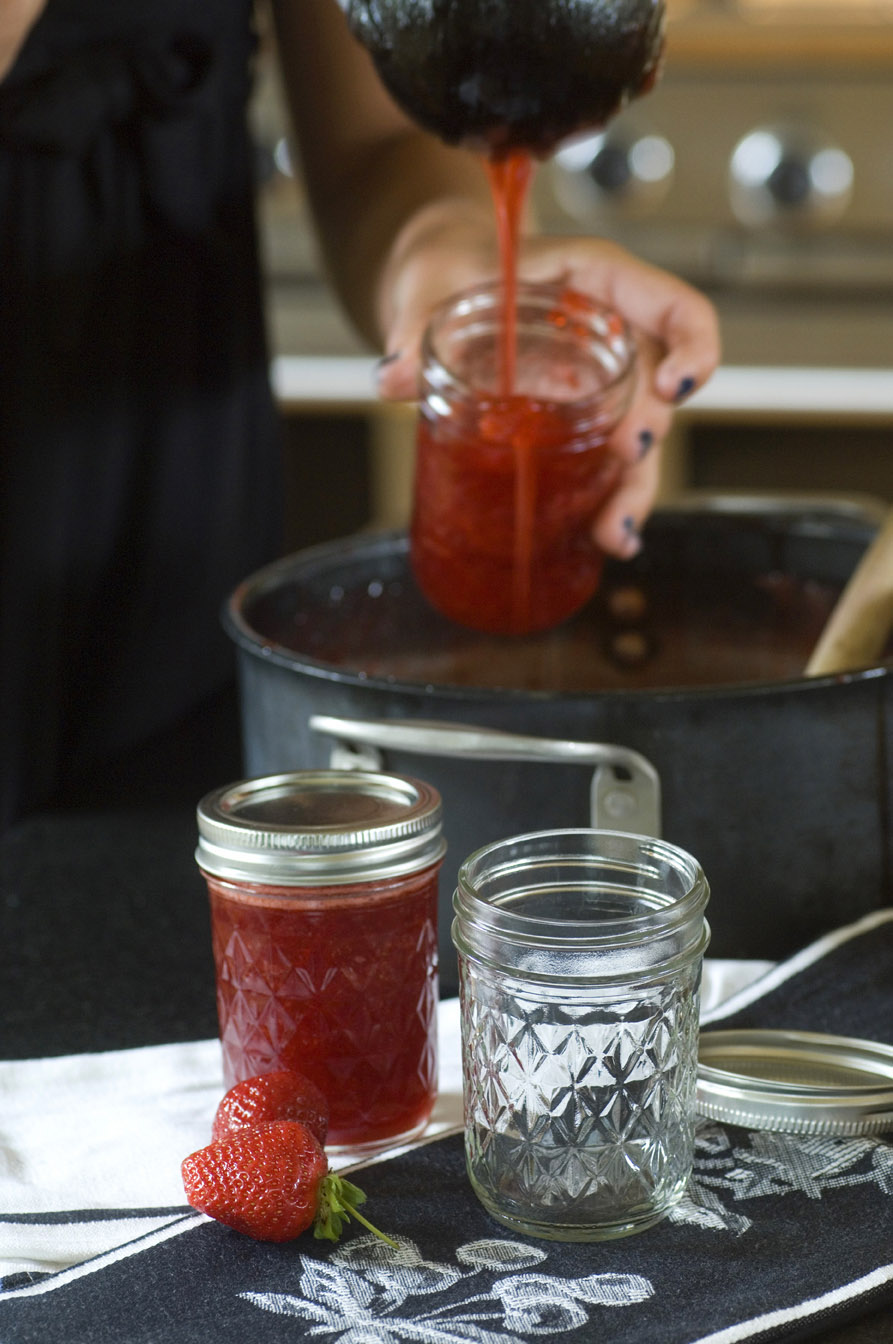
Filling canning jars using tested recipe
Answer: BUSTED!

Some people put leftovers from the table in a canning jar and process it long enough to seal the jar. This is not safe. It IS safe to can spaghetti sauce and stew but only from tested recipes. Some foods cannot be canned because it is impossible for the center of the food to reach high enough temperatures to destroy bacteria. Thickened stews and mashed potatoes are examples of foods too thick to can.

Guide sheets for home food preservation can be found at http://extension.missouri.edu/publications. The National Center for Home Food Preservation’s site is http://nchfp.uga.edu.

Contributors: Tammy Roberts (660-679-4167) and Susan Mills-Gray, Nutrition and Health Education Specialists, University of Missouri Extension

Thursday, March 7, 2013

Myth: The recipes that I find online for meals in a jar should be safe.

Answer: BUSTED!

Meals in a jar can be convenient and they can make nice gifts, but there is no guarantee that they are safe recipes. There are sites on the internet that suggest you pressure can a chicken soup recipe and then store each jar with a bag of noodles for a quick meal later. That can be done, but the soup is not safe unless it is from a tested recipe. Before spending an entire day preparing meals in a jar, make sure you are using tested recipes for home canning. Don't risk the health and safety of those who will be eating the final product. 

home-canned foods

Tested recipes are available through your local Extension office, the National Center for Home Food Preservation and Ball.

Contributors: Tammy Roberts (660-679-4167) and Susan Mills-Gray (816-380-8460), Nutrition and Health Education Specialists, University of Missouri Extension

Friday, September 28, 2012

Myth: I don’t have to worry about food safety at tailgates - the food won’t be around long enough to spoil.

Answer: BUSTED!

food on a hot barbecue grillFall and football season are here. What game is complete without a tailgate party? But while you’re watching the end zone, your food could end up in the “danger zone” of 40 to 140 degrees Fahrenheit.

Perishable foods should be eaten within 2 hours, or 1 hour if the outside temperature is above 90 degrees F, which will cause bacteria to grow faster. Here are some tips to keep your tailgate food safe.

Pre-cooking
  • Interrupted cooking is very risky. It’s not a good idea to partially pre-cook and finish on the grill later.
  • If you do cook the meat before heading to the game, be sure to cook it thoroughly and allow plenty of time for it to cool before packing it in the cooler. Store perishable foods at or below 40 degrees F.
  • Make sure the meat is cooked thoroughly and reaches a safe internal temperature when reheated.


Grilling
  • To grill safely, make sure the grill is ready and that the coals are very hot before cooking food. This can take 30 minutes or longer.
  • Coals should have a light coating of grey ash for optimal heat.
  • Thoroughly cook all meat and poultry. Use a meat thermometer to make sure the temperature has reached a safe internal temperature.
  • To assure meat is safe, cook hamburgers and brats to 160 F and chicken breast to 165 F.
  • Always make sure to wash your hands after handling raw meat.

Keep food at safe temperatures
  • Avoid the “danger zone.” Keep cold foods cold (below 40 degrees F) and hot foods hot (over 140 degrees F).
  • Serve hot, grilled foods immediately.
  • Put cooked foods on clean plates, not on plates that were used to hold raw meat or poultry.

Clean up and leftovers
  • Clean the grill after each use.
  • Chill any leftovers promptly. Divide larger quantities into small, shallow containers for faster cooling.
  • Keep all perishable foods on ice or refrigerated at all times.
  • Keep foods iced as you travel home and refrigerate as soon as you get home.

Visit MissouriFamilies.org to find more information on food safety.

Contributor: Karen Sherbondy, MEd, RD, LD, Extension Associate, Nutrition and Exercise Physiology, University of Missouri Extension, 816-655-6227

Wednesday, September 26, 2012

Myth: Leftovers are safe to eat until they smell bad.

Answer: BUSTED!

You can’t determine if a food is safe by its smell. Some spoiled food may be obvious. If your leftovers smell bad or look moldy or slimy, just throw them out. Never taste old leftovers to see if they are safe. Other spoilage may not be so obvious because some bacteria that can cause foodborne illness doesn’t affect the smell, taste or appearance of food.

Three food containers with leftoversHere are some tips for handling leftovers:
  • It is important to freeze or toss refrigerated leftovers within 3 to 4 days.
  • Label your leftovers with a date so you know how long you’ve had them.
  • Reheat foods only once and toss if there are any remaining leftovers.
  • If you don't anticipate using the leftovers in the recommended time span, freeze them to extend the shelf life. Freeze in portion sizes that are easily eaten in one setting.
  • Always thaw frozen leftovers in the refrigerator, not out on the counter.

Not sure how long that item has been sitting in the back of the refrigerator? Don’t take the risk — when in doubt, throw it out!

Visit MissouriFamilies.org to find more information on food safety.

Contributor: Karen Sherbondy, MEd, RD, LD, Extension Associate, Nutrition and Exercise Physiology, University of Missouri Extension, 816-655-6227

Monday, September 24, 2012

Myth: Food is safe to eat if I heat it in a microwave oven because the microwaves will kill the bacteria.

microwave oven
Answer: BUSTED!

It’s the heat that kills bacteria, not the microwaves. Microwave ovens are great time-savers, but make sure you take the time to adequately heat food to a safe internal temperature. That is what will kill the bacteria in foods.

Remember that foods can cook unevenly in microwave ovens. Microwaves cook food from the outside in toward the middle. Even if your microwave oven has a turntable, food can cook unevenly and leave cold spots where bacteria can survive.

Make sure to follow package instructions. If the instructions tell you to rotate and stir food during the cooking process or to let food stand for a period of time (to equalize the temperature), be sure to do it. Skipping these key cooking instructions may allow harmful bacteria to survive.

Check the temperature with a food thermometer in several spots to make sure food is heat thoroughly throughout. The same rules apply to leftovers — make sure to reheat them thoroughly to a safe internal temperature.

Visit MissouriFamilies.org to find more information on food safety and microwave ovens.

Contributor: Karen Sherbondy, MEd, RD, LD, Extension Associate, Nutrition and Exercise Physiology, University of Missouri Extension, 816-655-6227

Tuesday, September 18, 2012

Myth: I can cook any food in a microwave oven.

Answer: BUSTED!

Sometimes proper cooking requires the use of a conventional oven, not a microwave. Cooking instructions on packages are intended for a specific type of appliance and may not be applicable to all ovens.

pre-packaged chicken in microwave oven
Follow cooking instructions on the label
Some prepared convenience foods are oddly-shaped or have varying thicknesses, which can cause uneven cooking in a microwave oven. Cold spots can be left and bacteria can survive and grow.

Always use the appliance(s) recommended on the label, follow cooking instructions and use a food thermometer to make sure a safe internal temperature is reached to destroy bacteria that can cause foodborne illness.

Visit MissouriFamilies.org to find more information on food safety.

Contributor: Karen Sherbondy, MEd, RD, LD, Extension Associate, Nutrition and Exercise Physiology, University of Missouri Extension, 816-655-6227

Wednesday, May 30, 2012

Myth: To protect myself from foodborne illness caused by fresh produce, I can switch to local or organic and I won’t get sick.

Answer: BUSTED!

Any fruit or vegetable (local, organic or conventional) can become unsafe if it comes in contact with disease-causing bacteria on its way to your table. Contamination can be caused by many factors including worker hygiene and sanitation practices during production, harvesting, sorting, packing and transport; the source and quality of water; and solid animal waste from wild, domesticated or farm animals.

People often buy organic or local produce to avoid some pesticides, support smaller farms, and support farming practices that are less harmful to the environment. These are all valid reasons, but several studies have shown organic or local produce won’t necessarily protect you from foodborne illness, a common misconception.

woman washing broccoli in kitchen sink
You can take steps to protect yourself from foodborne illness by washing all produce before eating and avoiding cross-contamination by thoroughly washing your hands.

Click here for more information on eating local in Missouri.

Contributor: Mary Wissmann, MS, RD, LD, Nutrition and Health Education Specialist, University of Missouri Extension, WissmannM@missouri.edu, 314-615-2911

Thursday, May 24, 2012

Myth: I don’t have to be concerned about foodborne illness when eating fresh produce.

Answer: BUSTED!

Fruits and vegetables are an extremely important part of a healthy diet. Unfortunately, the number of foodborne illness cases involving fruits and vegetables is on the rise. This does not mean that we should be leery of eating fruits and vegetables, but we should take a few simple steps to protect ourselves.

  • Purchase produce that is free of bruises or damage.
  • When at the grocery store, bag fresh fruits and vegetables separately from animal products.
  • Keep fruits and vegetables that will be eaten raw separate from foods such as raw meat, poultry, or seafood, and from kitchen utensils used with those products.
  • When preparing fresh produce, begin with clean hands – washing for at least 20 seconds.
  • Wash all produce thoroughly under running water before eating, cutting or cooking. Even if you plan to peel the produce before eating, it is still important to wash it first so dirt and bacteria aren’t transferred from the knife into the fruit or vegetable. Scrub firm produce, such as melons and cucumbers, with a clean produce brush.
  • Dry produce with a clean towel.

Note: Neither soap nor fruit and vegetable washes are necessary. In fact, detergents can leave residue on the surface of fruit and vegetables that is unsafe for consumption. Clean cold water is all that is needed. Watch the video below from the University of Maine Cooperative Extension for more information about washing fruits and vegetables.


You can also watch the video here: How To: Washing Fruits and Vegetables

For additional information, see Steps to prevent foodborne illness when eating fresh produce on MissouriFamilies.org

Contributor: Mary Wissmann, MS, RD, LD, Nutrition and Health Education Specialist, University of Missouri Extension, WissmannM@missouri.edu, 314-615-2911

Thursday, May 17, 2012

Myth: Honey is a natural sweetener, so it is safe for all children and adults to consume.

Answer: BUSTED!

honey
Infant Botulism is a very dangerous condition caused by a type of bacteria that can be found in honey. Infants are particularly susceptible to the dangerous properties of the bacteria, and if they get some into their systems, the result can be deadly. The intestinal tract of babies is immature, so once the botulism spores enter their system they can produce a substance called botulism toxin which is released and absorbed through the intestinal tract. If an adult ingests these spores, once in the intestinal tract, the normally existing healthy bacteria present will take care of the spores and prevent illness.

Babies are at risk for the first year of life, but seem to be particularly susceptible between 2 and 4 months. For these reasons, honey should not be given to children under the age of 1.

For more information about feeding your baby visit MissouriFamilies.org

Contributors: Loni Stewart, Student Dietitian; Mary Wissmann, MS, RD, LD, Nutrition and Health Education Specialist, University of Missouri Extension, WissmannM@missouri.edu, 314-615-2911

Thursday, April 5, 2012

Myth: It's not safe to hide Easter eggs and eat them too.

Answer: BUSTED!
dyed Easter eggs in egg carton
Eggs that are dyed and hidden for an Easter egg hunt will be safe to eat if they were safely cooked (yolks are firm) before dying and if they are hidden and found within 2 hours. If the weather is hot, shorten the 2 hours to 1 hour. It is best to avoid hiding places with dirt, moisture and pets – these are sources of bacteria which can penetrate the egg shell and cause illness. After finding the eggs within the recommended two hours, wash, re-refrigerate, and eat within 7 days of when you cooked the eggs.

Another option? Don’t hide the eggs you plan to eat – use plastic eggs instead.

Read Follow safety rules when preparing Easter eggs on MissouriFamilies.org for more information about Easter egg safety and other Easter egg ideas.

Contributor: Ellen Schuster, M.S., R.D., Associate State Specialist, University of Missouri Extension, schusterer@missouri.edu, 573-882-1933