Tuesday, January 25, 2011

Myth: Multi-grain and whole grain products provide the same health benefits.

Answer: BUSTED!

Manufacturers are able to trick consumers into thinking they are buying a healthier product by using the label 'multi-grain', when actually, the food is not providing the same nutrients as 'whole grain' products. These terms are not interchangeable.

In order to be considered multi-grain, the product has to be made with more than one type of grain; however, this does not necessarily mean it was made with whole grains. When multi-grains are used, you are missing out on valuable nutrients provided in whole grain products. Multi-grain products are commonly processed and refined. Nutrients such as fiber, which helps the body move food along the intestinal tract, and antioxidants, which protect the cells, are lost in the production of multi-grain products.

whole grains
Whole grains are the best option when choosing foods. They provide health benefits that have been shown to decrease the risk of heart disease by lowering cholesterol.

How do you know products are made with whole grains? As stated earlier, manufacturers tend to label products on the front of packages with phrases such as 'made with whole wheat,' or 'multi-grain' but these can be confusing to consumers.

In order to really know if the product has whole grains, it is important to look at the ingredient list. The ingredient list will name the most used ingredient first and so on. If the word 'whole' appears along with the type of grain within the first four ingredients then the product contains whole grains.

The Whole Grains Council recently created a whole grain stamp that manufacturers are able to put on their products. The stamp helps the consumer know if the product contains at least one-half serving or one full serving of whole grain. The good sources will provide one-half serving and the excellent sources will provide one whole serving. The stamp can be found anywhere on the packaging, so a little searching may be necessary.
whole grains stamp

Products that could contain whole grains range from breads to pastas to cereals. It is important to read the labels and know what you are eating.

Whole grains are sure to be found in:
  • Brown rice
  • Oatmeal
  • Popcorn
  • Bulgar wheat
  • Quinoa

The most important thing a consumer can do is not be fooled by packaging. Read the ingredients and choose whole grains. Help bust the myth!

Contributors: Mallory Bratton, KU Med Dietetic Intern & Denise Schmitz, M.A., R.D., Nutrition & Health Education Specialist, University of Missouri Extension, 816-482-5854, schmitzda@missouri.edu

Wednesday, January 19, 2011

Myth: The best place to work out is the gym.

Answer: BUSTED!

It is important for each person to find their favorite setting to participate in physical activity. By finding your favorite exercise setting, it becomes easier to stick with an exercise regimen and achieve your fitness goals. There are many places to exercise other than the gym; however, if you find you are more focused and work out harder at the gym then that is where you should go. What if you have never stepped foot in a gym or fitness center?? Many offer free week-long trials and also include a free personal training session, so maybe now is the time to try it out.

If heading to the fitness center isn’t an option for you, here are a few other ideas…

Join a sports league such as softball or volleyball and get your spouse and kids involved for family fun.

Mother & daughter working out together
Exercise to a workout DVD and get fit in the comfort of your own home. There are a lot of safe, fun exercise DVDs available. Find one that interests you such as a dance or kickboxing workout.

Find an exercise class at the fitness center. They usually charge for each class but are still a fraction of the cost of a full gym membership.

Walk or bike around the block with a friend or your kids.

Go to the ice skating rink. It is a great cardio exercise even though it doesn’t seem like exercise.

Play the Wii or XBOX Kinect with the kids for entertaining activity.

Remember to always stretch, stay hydrated and HAVE FUN!!!

Be sure to check with your physician before starting an exercise plan.

Additional nutrition and health information can be found on the Missouri Families website.

Contributor: Jill Miranda, Mo DHSS, Dietetic Intern; Denise Schmitz, M.A., R.D., Nutrition & Health Education Specialist, University of Missouri Extension, 816-482-5854, schmitzda@missouri.edu

Wednesday, January 12, 2011

Myth: I have to change everything I eat all at once to make my diet healthy.

Answer: BUSTED

One step at a time is the key to success and one way to move toward a healthier lifestyle is by setting goals. Setting goals can have a powerful impact in all aspects of your life especially when it comes to improving nutrition and health. Many New Year’s resolutions involve exercising, lowering cholesterol, losing weight, eating healthier, etc. These resolutions can be achieved with smart goal setting. If improving your health is a top priority, then setting a goal is a great way to create accountability for yourself and your family!!!

Pick a simple goal to start!! For example…
  • Take the stairs each morning
  • Eat fruit for lunch
  • Switch to 1% or skim milk at breakfast
  • Park farther away in the parking lot
  • Eat from a smaller plate at dinner

ladder extending into the sky
STEPS TO HELP ACCOMPLISH YOUR GOAL:
  • Get support from a friend or family member
  • Set a series of small goals and complete one at a time
  • Set a date to complete the goal
  • Set a goal that is realistic
  • Create a simple plan to achieve the goal
  • Work with a partner
  • Visualize reaching your goal
  • Reward yourself after success (spa day, out to the movies…)

For more information on healthy eating go to MissouriFamilies.org.

Contributors: Jill Miranda, MDHSS Dietetic Student & Denise Schmitz, M.A., R.D. Nutrition & Health Education Specialist, University of Missouri Extension, 816-482-5854, schmitzda@missouri.edu

Thursday, December 30, 2010

Myth: There is no difference between white and brown rice.

white rice
Answer: Busted!

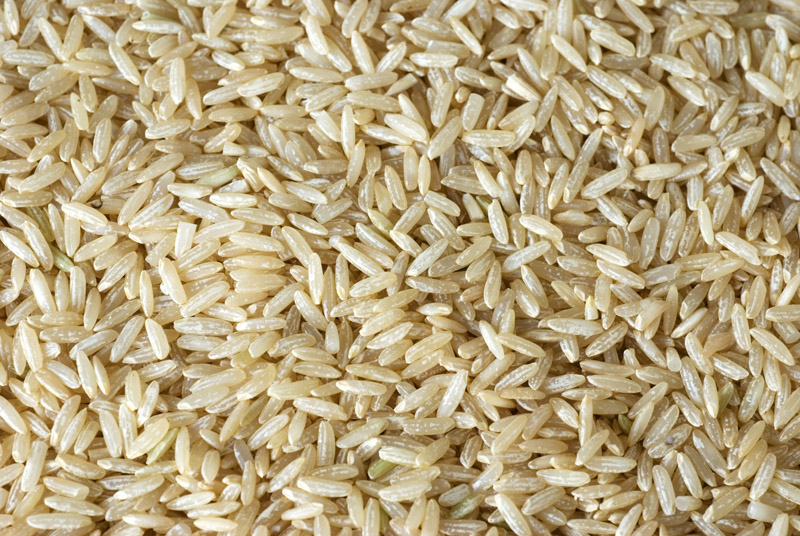
Brown rice is simply white rice that has not had the brown-colored bran covering removed. Since brown rice still has the bran intact, it has more fiber than white rice. One cup of brown rice has 3½ grams of fiber while the same amount of white rice has less than 1 gram of fiber. Brown rice contains nutrients like magnesium, manganese and zinc. White rice has reduced levels of these nutrients, but is often fortified with iron and some B vitamins.
brown rice

Brown rice takes longer than white rice to cook so increase the amount of water slightly. Brown rice doesn't have the fluffy texture of white rice, but its nutty flavor and chewy texture makes brown rice a tasty way to get fiber into your diet. Remember, a high fiber diet may lower your risk of heart disease, helps bowel function so you don’t get constipated and helps give you a feeling of fullness with fewer calories.

Additional nutrition and health information can be found on the Missouri Families website.

Contributor: Maude Harris, Nutrition and Health Education Specialist, University of Missouri Extension, harrismau@missouri.edu, 573.545.3516

Tuesday, December 28, 2010

Myth: I can cook my turkducken at 190° F for 12 to 13 hours.

Answer: Busted!

A turkducken is a partially boned turkey layered with a boned duck then with a boned chicken, all of which is spread with layers of stuffing between each bird. The name is comprised of syllables from the words “turkey,” “duck,” and “chicken.” Usually the tip end of the turkey leg bones and the first two wing joints are left on the turkey so that after assembly the finished product resembles a whole turkey.

There has been an unsafe cooking method circulating around that consists of the bird being roasted at 190° F for 12 to 13 hours. A safer method of roasting would be to cook the birds in a pre-heated oven set no lower than 325° F. Use a meat thermometer inserted in the thickest part of the bundle and make sure the stuffing and birds reach 165° F or higher. Be sure to check the temperature in several locations to test for doneness. To determine if it is done, you have to rely on internal temperature taken with a meat thermometer rather than the amount of time cooked. After each use, wash the stem section of the thermometer thoroughly in hot, soapy water.

Additional nutrition and health information can be found on the Missouri Families website.

Contributor: Maude Harris, Nutrition and Health Education Specialist, University of Missouri Extension, harrismau@missouri.edu, 573.545.3516