Answer: BUSTED!
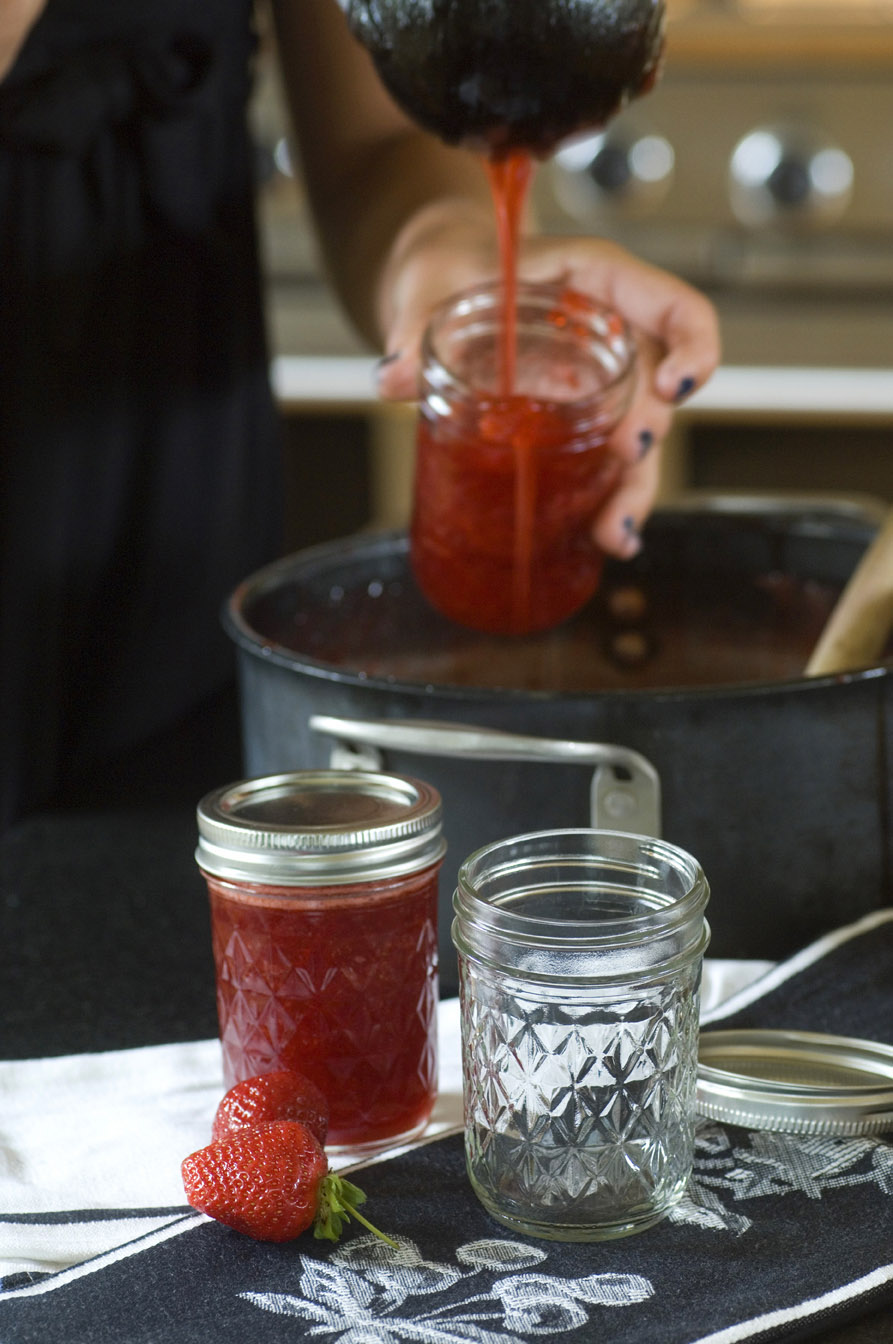
Some people put leftovers from the table in a canning jar and process it long enough to seal the jar. This is not safe. It IS safe to can spaghetti sauce and stew but only from tested recipes. Some foods cannot be canned because it is impossible for the center of the food to reach high enough temperatures to destroy bacteria. Thickened stews and mashed potatoes are examples of foods too thick to can.
Guide sheets for home food preservation can be found at http://extension.missouri.edu/publications. The National Center for Home Food Preservation’s site is http://nchfp.uga.edu.
Contributors: Tammy Roberts (660-679-4167) and Susan Mills-Gray, Nutrition and Health Education Specialists, University of Missouri Extension
Thursday, March 14, 2013
Myth: Canning your homemade stew, spaghetti and even mashed potatoes is safe.
Labels:
Canning,
Food preservation,
Food safety
Thursday, March 7, 2013
Myth: The recipes that I find online for meals in a jar should be safe.
Answer: BUSTED!
Meals in a jar can be convenient and they can make nice gifts, but there is no guarantee that they are safe recipes. There are sites on the internet that suggest you pressure can a chicken soup recipe and then store each jar with a bag of noodles for a quick meal later. That can be done, but the soup is not safe unless it is from a tested recipe. Before spending an entire day preparing meals in a jar, make sure you are using tested recipes for home canning. Don't risk the health and safety of those who will be eating the final product.
Tested recipes are available through your local Extension office, the National Center for Home Food Preservation and Ball.
Contributors: Tammy Roberts (660-679-4167) and Susan Mills-Gray (816-380-8460), Nutrition and Health Education Specialists, University of Missouri Extension
Meals in a jar can be convenient and they can make nice gifts, but there is no guarantee that they are safe recipes. There are sites on the internet that suggest you pressure can a chicken soup recipe and then store each jar with a bag of noodles for a quick meal later. That can be done, but the soup is not safe unless it is from a tested recipe. Before spending an entire day preparing meals in a jar, make sure you are using tested recipes for home canning. Don't risk the health and safety of those who will be eating the final product.
Tested recipes are available through your local Extension office, the National Center for Home Food Preservation and Ball.
- Guide sheets for home food preservation can be found at http://extension.missouri.edu/publications.
- The National Center for Home Food Preservation’s website is http://nchfp.uga.edu.
- The Ball website can be accessed at http://freshpreserving.com.
Contributors: Tammy Roberts (660-679-4167) and Susan Mills-Gray (816-380-8460), Nutrition and Health Education Specialists, University of Missouri Extension
Labels:
Canning,
Food preservation,
Food safety
Thursday, February 28, 2013
Myth: Some of the foods I eat seem to be causing acne.
Answer: BUSTED, kind of...
We don’t know for sure yet what causes acne, but diet may play a role. A new review of a group of studies looking at diet and acne in males 15 to 25 years of age found that eating less high-carb foods such as white bread, pasta, crackers, white rice, soda, juice and candy bars is linked to less acne. Researchers suggest that eating these foods spike blood sugar which increases hormones. The hormones can stimulate oil production, triggering acne. However, good clinical studies involving larger numbers of people are needed before it can be stated that certain foods actually cause acne.
So what to do in the meantime? There’s nothing wrong – and a lot right – to suggest eating less foods like soda, candy bars and refined grains like white bread. Eating more whole grains, a variety of fruits and vegetables and lean proteins will provide you with a healthy diet and can protect against heart disease, diabetes and obesity.
What about chocolate and acne? Based on the research, it’s more likely that the sugar in chocolate is what causes acne reactions, rather than the chocolate itself.
For more tips about healthy eating, visit MissouriFamilies.org.
Contributor: Ellen Schuster, M.S., R.D., Associate State Specialist, University of Missouri Extension, schusterer@missouri.edu, 573-882-1933
We don’t know for sure yet what causes acne, but diet may play a role. A new review of a group of studies looking at diet and acne in males 15 to 25 years of age found that eating less high-carb foods such as white bread, pasta, crackers, white rice, soda, juice and candy bars is linked to less acne. Researchers suggest that eating these foods spike blood sugar which increases hormones. The hormones can stimulate oil production, triggering acne. However, good clinical studies involving larger numbers of people are needed before it can be stated that certain foods actually cause acne.
![]() |
| Replace junk foods with a healthy, balanced diet |
So what to do in the meantime? There’s nothing wrong – and a lot right – to suggest eating less foods like soda, candy bars and refined grains like white bread. Eating more whole grains, a variety of fruits and vegetables and lean proteins will provide you with a healthy diet and can protect against heart disease, diabetes and obesity.
What about chocolate and acne? Based on the research, it’s more likely that the sugar in chocolate is what causes acne reactions, rather than the chocolate itself.
For more tips about healthy eating, visit MissouriFamilies.org.
Contributor: Ellen Schuster, M.S., R.D., Associate State Specialist, University of Missouri Extension, schusterer@missouri.edu, 573-882-1933
Labels:
Healthy eating
Wednesday, February 13, 2013
Myth: I made a New Year’s resolution to get to the gym more but now I’m starting to miss some days. I must be the only one.
Answer: BUSTED!
Join the club…the failed New Year’s resolution club! Gold’s Gym recently identified February 7th as ‘fitness cliff’ day – the day when they start to see gym membership slow down after all those New Year’s resolutions. What’s happening? Often the goals that we set are just not realistic. Here are some tips to get you started (or re-started!):
Contributor: Ellen Schuster, M.S., R.D., Associate State Specialist, University of Missouri Extension, schusterer@missouri.edu, 573-882-1933
Join the club…the failed New Year’s resolution club! Gold’s Gym recently identified February 7th as ‘fitness cliff’ day – the day when they start to see gym membership slow down after all those New Year’s resolutions. What’s happening? Often the goals that we set are just not realistic. Here are some tips to get you started (or re-started!):
- Be specific! A goal like “I will go to the gym more often” is not specific enough. Instead, your goal is better stated this way: “I will go to the gym 3 days a week.”
- Be realistic! Start slow to make some early and quick successes. If you aren’t currently active, it isn’t realistic to expect that you will walk 5 miles in a month. You are more likely to be consistent if your goals are realistic. Consistency leads to achievability when it comes to goals.
- Write your goals down – in your calendar, smartphone, wall calendar. Pencil in your 3 days a week at the gym each week so it is part of your weekly schedule.
- Reward yourself. If you’ve met your walking goals, get a snazzy pair of new walking shoes as a reward.
Contributor: Ellen Schuster, M.S., R.D., Associate State Specialist, University of Missouri Extension, schusterer@missouri.edu, 573-882-1933
Labels:
Changing habits,
Exercise,
Physical activity
Thursday, February 7, 2013
Myth: Foods sold in school vending machines don’t have to follow the same ‘healthy’ rules as school meals.
Answer: TRUE, but that may change...
On Friday, Feb. 1, 2013, USDA issued proposed guidelines that would mean healthier options in schools – foods lower in fat, sugar and sodium with more of the nutrients kids need. Access to sugary drinks would be limited.
Why is this important? Students get anywhere from about 1/3 to 1/2 of their calories at school.1 About 40% of all students buy and eat one or more snacks at school and 68% buy and drink at least one sugary drink.1 The proposed guidelines would cover foods available in school vending machines, "a la carte" lunch lines and any other foods regularly sold around school including snack bars. The proposed rules, if approved and implemented, would not cover in-school fundraisers, bake sales, after-school concessions at school games, food brought from home for classroom celebrations or anything a student brings from home to eat. School meals that are supported by the government wouldn’t follow these new guidelines since they follow other recently updated rules. Individual states and school districts could decide to add additional regulations to go beyond the guidelines.
There will be a 60 day comment period. The guidelines are available at www.federalregister.gov and www.regulations.gov. The standards will not go into effect until at least one full school year after public comment is considered and implementation rules are published.
1How can healthier school snacks and beverages improve student health and help school budgets? Robert Wood Johnson Foundation, http://www.rwjf.org/content/dam/farm/reports/issue_briefs/2013/rwjf72649 accessed Feb. 5, 2013.
Contributor: Ellen Schuster, M.S., R.D., Associate State Specialist, University of Missouri Extension, schusterer@missouri.edu, 573-882-1933
On Friday, Feb. 1, 2013, USDA issued proposed guidelines that would mean healthier options in schools – foods lower in fat, sugar and sodium with more of the nutrients kids need. Access to sugary drinks would be limited.
Why is this important? Students get anywhere from about 1/3 to 1/2 of their calories at school.1 About 40% of all students buy and eat one or more snacks at school and 68% buy and drink at least one sugary drink.1 The proposed guidelines would cover foods available in school vending machines, "a la carte" lunch lines and any other foods regularly sold around school including snack bars. The proposed rules, if approved and implemented, would not cover in-school fundraisers, bake sales, after-school concessions at school games, food brought from home for classroom celebrations or anything a student brings from home to eat. School meals that are supported by the government wouldn’t follow these new guidelines since they follow other recently updated rules. Individual states and school districts could decide to add additional regulations to go beyond the guidelines.
There will be a 60 day comment period. The guidelines are available at www.federalregister.gov and www.regulations.gov. The standards will not go into effect until at least one full school year after public comment is considered and implementation rules are published.
1How can healthier school snacks and beverages improve student health and help school budgets? Robert Wood Johnson Foundation, http://www.rwjf.org/content/dam/farm/reports/issue_briefs/2013/rwjf72649 accessed Feb. 5, 2013.
Contributor: Ellen Schuster, M.S., R.D., Associate State Specialist, University of Missouri Extension, schusterer@missouri.edu, 573-882-1933
Labels:
Children,
Healthy eating
Subscribe to:
Posts (Atom)


