Monday, July 11, 2011

Myth: I can use raw eggs to make homemade ice cream and it won't make me sick.

Answer: Busted!

Raw eggs, if not pasteurized, can be dangerous. They can be a source of a foodborne illness caused by Salmonella enteritidis bacteria. Therefore, it is advised that you start with a cooked egg base for ice cream. This is especially important if you’re serving people at high risk for foodborne infections: infants, older adults, pregnant women and those with weakened immune systems.

You can still enjoy homemade ice cream without the risk of Salmonella infection by substituting a pasteurized egg product or egg substitute, or finding a recipe without eggs.

Another option for safe homemade ice cream is to use a cooked egg base. The American Egg Board has a recipe for homemade ice cream made with eggs that are heated to an internal temperature of 160 degrees Fahrenheit and then cooled. This temperature will kill Salmonella, if present.

strawberry ice creamBy following safe food handling and cooking practices, you can enjoy refreshing, tasty homemade ice cream without worrying about making anyone sick!

Additional nutrition, health and food safety information can be found at http://missourifamilies.org/.

Contributor: Maude Harris, Nutrition and Health Education Specialist, University of Missouri Extension, harrismau@missouri.edu, 573.545.3516

Friday, July 8, 2011

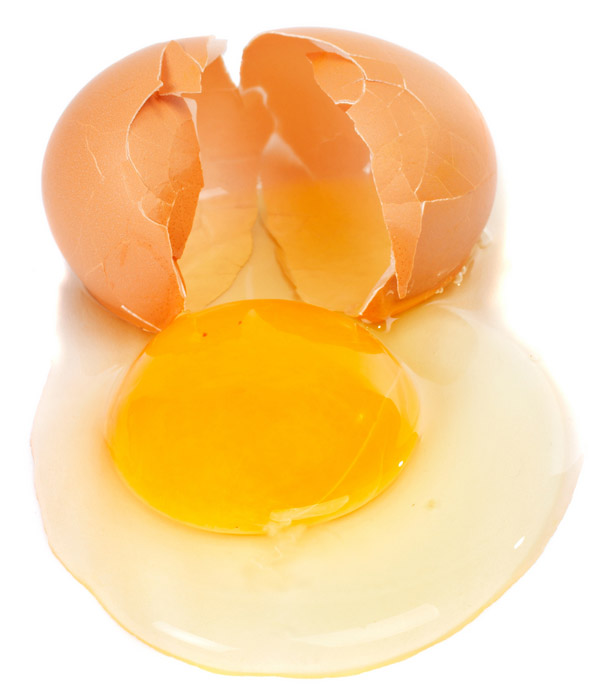
Myth: Throw away eggs with blood spots in the yolk.

broken egg shell with egg spilling out
Answer: Busted!

Occasionally, a small blood spot will appear in an egg yolk. This actually indicates an extremely fresh egg. This does not indicate a fertile egg, but rather a ruptured capillary on the yolk surface during the egg formation. These eggs are safe to eat and the blood spot can be removed with a knife for better appearance.

Additional nutrition and health information can be found at http://missourifamilies.org.

Contributor: Maude Harris, Nutrition and Health Education Specialist, University of Missouri Extension, harrismau@missouri.edu, 573.545.3516

Wednesday, July 6, 2011

Myth: A serving of ackee has the same amount of calories as a large egg.

Ackee with salted cod fish and vegetablesAnswer: Busted!

One serving of ackee is 25 calories, while a large egg has about 78 calories. Ackee has high nutritional value and is rich in essential fatty acids, vitamin A, zinc and protein.

Ackee is a Jamaican fruit that is creamy yellow in color and has a texture very much like scrambled eggs when cooked. The fruit of the ackee is not edible in its entirety. Only the inner, fleshy yellow arils are consumed. It is usually served with salted cod fish.

Ackee must be harvested, prepared and cooked properly. The pods should be allowed to ripen and open naturally on the tree before picking. Then you can easily extract the fleshy yellow bits. These edible yellow bits, called the arils, must be boiled for 30 minutes and then drain the water. Keep in mind that raw ackee and the inner red tissue of the ripe ackee arils contain toxins which can produce a syndrome of vomiting, seizures and sometimes fatal hypoglycemia (low blood sugar).

For information on other health and nutrition topics, visit the MissouriFamilies website.

Contributor: Maude Harris, Nutrition and Health Education Specialist, University of Missouri Extension, harrismau@missouri.edu, 573.545.3516

Tuesday, June 28, 2011

Myth: If my jars seal, I know my foods have been successfully canned.

Answer: Busted!

A sealed jar simply means a vacuum has occurred in the jar. Pouring hot food in a jar and quickly applying a lid and jar ring will probably result in a weak seal in that jar. This method is called open kettle canning and is extremely dangerous. Live bacteria easily survive this method of getting a jar to seal. Without adequate processing, live bacteria has become sealed in the jar with the food.

When food is canned at home, two problems must be addressed. First, destroy all dangerous bacteria in the food and in the jar. Second, seal the jar so food does not become recontaminated. Getting a seal only addresses half of the problem.

A sealed jar is of no value if dangerous bacteria survive. Follow these steps to address the issue of destroying all the bad bacteria, yeast and mold that occurs naturally in the environment:
  • Wash produce before canning.
  • Use up-to-date canning recipes.
  • Follow the recommended processing methods and times exactly for each food, jar size and style of pack.
  • Use a pressure canner to be safe with non-acid foods like corn, green beans, peas, plain beets and other vegetables.
  • Foods that contain natural acidity like fruit or fruit jams and jelly may be safely canned in a water bath canner. Foods that have added acidity like pickles and relishes, may also be canned in a water bath canner.
Lifting sealed jar from canner
Now that the food has been prepared and canned properly, you want to ensure a good seal on the jar. A good seal is best produced by water bath canning or pressure canning. Since the jar comes out of the water bath canner at 212 degrees F, it develops a strong seal. Processing a closed, filled jar in a canner kills bacteria that might be in the headspace. The purpose of the seal is to prevent the canned food from being recontaminated by bacteria, yeast or mold.

For more information, visit MissouriFamilies or the National Center for Home Food Preservation.

Contributor: Mary Schroepfer, MS, Nutrition and Health Education Specialist, Franklin County, University of Missouri Extension, SchroepferM@missouri.edu

Friday, June 24, 2011

Myth: Modern formulas are almost the same as breast milk.

Answer: Busted!

Mother breastfeeding baby
Both breast milk and infant formula will help your baby grow. However, breast milk is the best first food for babies, according to the American Academy of Pediatrics. Breast milk gives your baby more than just good nutrition. It also provides important substances to fight infection. Deciding to breastfeed can give your baby the best possible start in life. Breastfeeding benefits you and your baby in many ways. It provides warmth and closeness. The physical contact helps create a special bond between you and your baby.

For more information, see the breastfeeding benefits article on the MissouriFamilies website.

Contributor: Damaris Karanja, MA, Nutrition and Health Education Specialist, St. Louis County, University of Missouri Extension, Karanjad@missouri.edu